



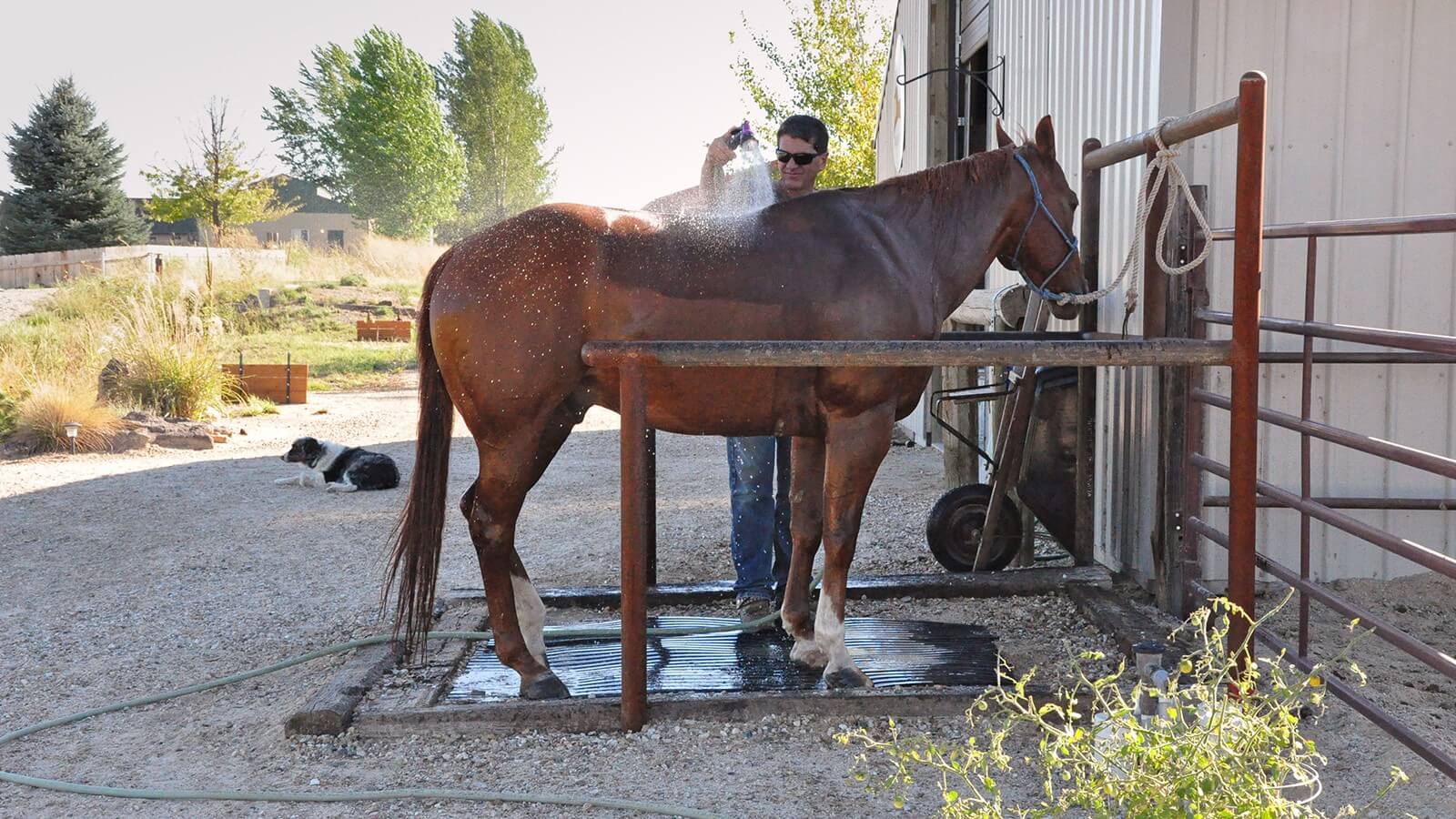
By the middle of summer, I’ll take any excuse to bathe horses outside instead of inside the barn. There’s usually better airflow, more room to work, and honestly, most horses seem more relaxed out in the open.
But I’ve also learned the hard way that simply dragging a hose into the yard doesn’t magically create a good wash area. Without a little planning, it turns into slick mud, standing water, and a mess you regret every time you walk through it.
A well-designed outdoor wash rack doesn’t have to be fancy. It just needs to be safe, functional, and built with both horses and water runoff in mind.
Outdoor wash racks are a 3-season way to hose off or bathe your horse while allowing the water to recharge the natural hydrology of your property. Even if you already have an indoor wash stall, during the warm summer months an outdoor wash rack can provide extra bathing capacity for a facility and keep things from getting backed up. If you don’t already have a place to bathe your horse, outdoor wash racks can be low cost and low maintenance to build. Plus, it is just plain nice to be outside!
Here are a few key points to keep in mind for setting up your outdoor wash rack.
Soil type: Outdoor wash racks require well-drained soils in order for them not to turn into a quagmire. Repeated use of your wash rack will quickly turn wet or organic soils into mud.
Location: Choose a higher area (versus a low spot which will collect water and turn into a bathtub). Stay away from creeks, ditches, wetlands, or other water bodies as well as away from manure storage areas (so that water runoff does not pollute waterways or collect in manure storage).
Chore efficiency: Your wash rack should be convenient to your barn or shelter area, as well as close to a faucet/water source.
Size: A wash rack can vary in size — from slightly larger than the footprint of a horse (approximately 10 feet x 4 feet) to a generous box stall size (16 feet x 16 feet) — or larger if you plan for bathing multiple horses at once.
Footing: Crushed rock footing (no larger than 5/8 inch for the comfort of the horse) 3 to 6 inches deep improves drainage. Washed or clear rock will drain best. Angular crushed will lock in place which round rock will not do. Stall mats can be placed on top of crushed rock. You may wish to frame in the wash rack footing to hold the material and mats in place. Tip: for cost savings, consider recycled conveyor belting instead of stall mats.
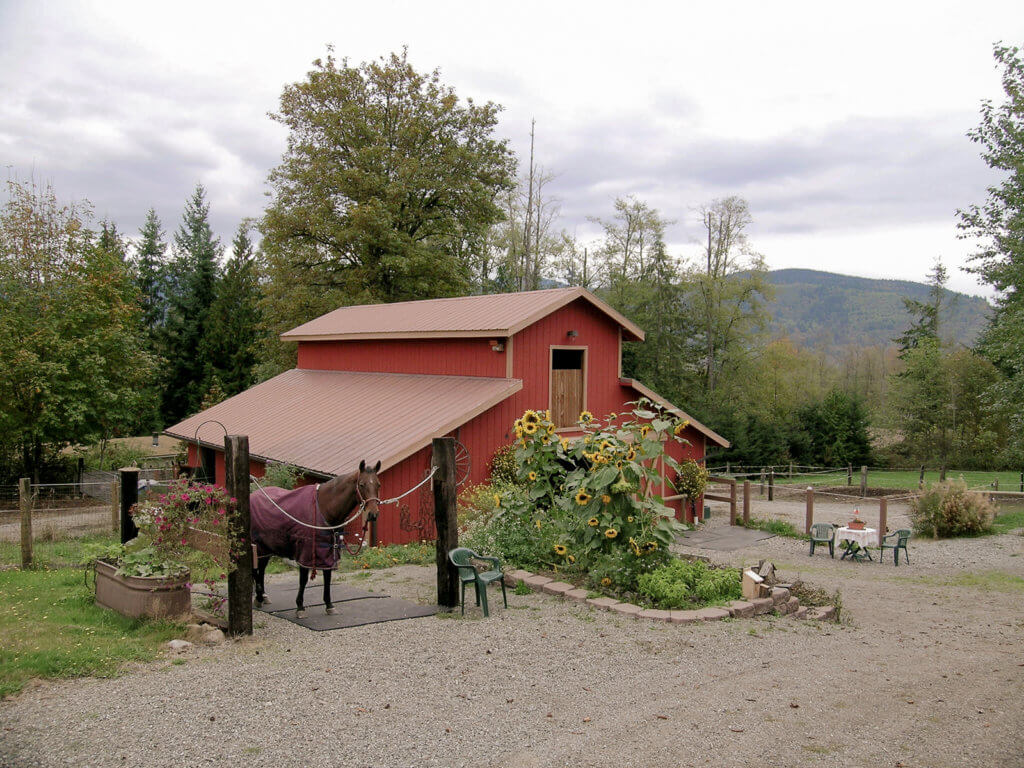
Side rails: Having side rails defines a space, holds the horse in, and keeps a horse from moving away from the spray of the hose. However, side rails can be confining and potentially dangerous if a horse panics, pulls back and traps you so design the space with handler safety in mind.
Ties: Cross ties can help to keep a horse from thinking they can turn around in the wash rack. Some sort of tie system is necessary to keep a horse from moving about. Remember to always tie a horse high and short on a sturdy post, not a rail.
Hose: The hose can be as simple as a hose you drag around (make sure your horse is desensitized to hoses before you put them in the wash rack and commence bath time). Or the hose could be affixed to an overhead boom which make bathing easier.
Material choices: Side rails and posts can be made from any strong, sturdy, waterproof material such as railroad ties or welded pipe. Be sure corners are safe and there are no protruding objects where a horse could get hurt like bolt ends, nails, boards or the tops of metal posts. Watch out for sharp corners or rough bottom edges.
Vegetated filter strip buffer: (use photo vegetation.jpg if possible. Surround an outdoor wash rack with vegetation. Healthy soil and plants break down contaminants such as from soaps or fly sprays and help prevent runoff and mud. This can be as simple as lawn grass or as sophisticated as a pollinator hedgerow or rain garden.
Optional: Consider a shelf or basket along one side to hold shampoos, sweat scrapers, or other grooming tools.
Choose the products that you use in your wash rack carefully as runoff can potentially soak into groundwater. Look for soaps or shampoos made from biodegradable ingredients. Avoid chemicals, insecticides, or anything else that could cause contamination. It’s also important to avoid allowing soapy, dirty water from running directly into nearby water bodies such as a ditch, stream, or wetlands – or from creating a muddy eyesore.
Start designing your outdoor wash rack now and get ready to enjoy the outdoors and warm weather ahead!
Check out the Horses for Clean Water website for information on online classes, private consultations, tip sheets, and other resources for horse keeping and land management education.
Originally published at https://nwhorsesource.com/build-an-outdoor-wash-rack-tips-for-happy-horse-bathing-outside/
Alayne Blickle began in the 1990’s as a pioneer in water conservation and natural resources conservation by creating the entrepreneurial consulting business, Horses for Clean Water, an award-winning internationally acclaimed education program that looks for horse-healthy, nature-based solutions to land management challenges. She continues this work today partnering with agencies, organizations, and horse owners throughout North America and worldwide. She is a regularly contributing writer and photojournalist to several equine publications.
Alayne lives with her horse trainer husband, Matt Livengood, in southwestern Idaho where they raise and train AQHA horses and mustangs on their eco-friendly horse ranch. Contact her through the Horses for Clean Water website or through their ranch website Sweet Pepper Ranch.
For more information contact Alayne at [email protected] or 206-909-0225.
