




More horse owners than ever are exploring barefoot hoof care, and for good reason. When managed thoughtfully, many horses can thrive without traditional shoes while maintaining healthy, functional feet.
But successful barefoot management involves more than simply pulling shoes and hoping for the best.
Like most things in horse care, it works best when you look at the whole horse — not just the hooves.
Start with the Right Hoof Care Professional
One of the most important decisions you’ll make is choosing the person who trims your horse.
A good barefoot trimmer or farrier should be willing to answer questions, explain what they’re seeing, and work with both you and your horse as individuals. Every horse’s hoof shape, workload, environment, and movement patterns are different.
I’ve found that the best hoof care professionals are often teachers as much as they are trimmers. They help owners understand what healthy hoof function looks like and what changes may be needed to support it.
And honestly, if communication doesn’t feel right, it’s okay to keep looking.
Healthy Hooves Are Designed to Move
In the wild, horses travel long distances every day searching for food and water. That constant movement helps maintain hoof health naturally.
Domestic horses live very different lives.
Many spend significant time standing in stalls, small paddocks, or lush pastures. While these environments may be comfortable, they don’t always provide the same opportunities for natural hoof wear and circulation.
Movement helps stimulate blood flow within the hoof and supports the natural expansion and contraction that occurs when a horse walks.
In simple terms: healthy feet are working feet.
Turnout Benefits More Than Just Hooves
One thing horse owners sometimes underestimate is how much horses benefit from freedom of movement and social interaction.
Horses kept with compatible herd mates often move more throughout the day than horses kept alone. They interact, play, establish social bonds, and naturally travel greater distances around their environment.
Those extra steps may not seem significant, but they add up.
And the benefits extend well beyond hoof health to overall fitness, mental wellbeing, and behavior.
Don’t Forget About Moisture
Hoof moisture can be a balancing act.
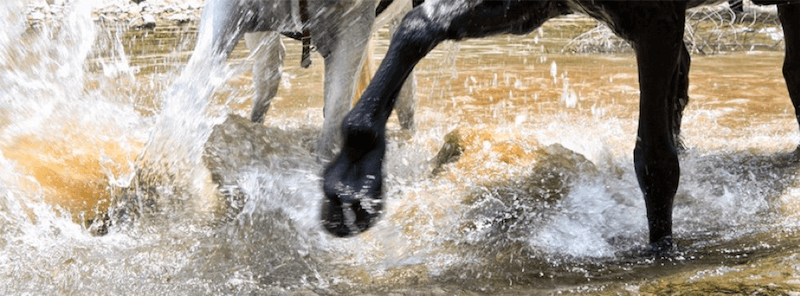
Extremely wet conditions can create problems, but excessively dry hooves may become brittle and lose some of their natural elasticity. In nature, horses regularly encounter varying terrain and moisture levels as they travel.
Providing access to water, wet areas, or natural moisture can help maintain healthier hoof condition in some environments.
The goal isn’t constantly wet feet — it’s supporting a healthy, functional hoof that can adapt to changing conditions.
Protection Has Its Place
One misconception about barefoot horses is that they should be comfortable on every surface all the time.
The reality is that many domestic horses spend most of their lives on soft footing. Then we ask them to carry a rider over gravel roads, rocky trails, or hard-packed surfaces for miles at a time.
That’s a very different workload.
Hoof boots can be an excellent tool for horses that are barefoot but need additional protection during rides. They allow horses to enjoy the benefits of barefoot management at home while providing support when terrain becomes more demanding.
Think About the Whole Horse
Successful barefoot programs rarely focus on hooves alone.
Movement.
Nutrition.
Turnout.
Hydration.
Regular trimming.
Appropriate protection when needed.
All of these pieces work together.
At the end of the day, healthy hooves are often a reflection of healthy overall management. And when the whole horse is considered, strong, functional feet usually follow.

The Northwest Horse Source is an independently owned and operated print and online magazine for horse owners and enthusiasts of all breeds and disciplines in the Pacific Northwest. Our contemporary editorial columns are predominantly written by experts in the region, covering the care, training, keeping and enjoyment of horses, with an eye to the specific concerns in our region.
