



Progress Comes One Small Step at a Time
I may have found the secret to a well-lived life. I call it, “Do whatever you can do.”
Okay, maybe this just works for me, but I want to share it with my fellow horse people who might also struggle to get their horses ridden or trained and are feeling guilty about it.
Guilt leads to depression which leads to inaction which leads to more guilt and depression until we can’t even find the energy to get off the couch or stop scrolling. When I have a lot on my plate every day, or I have trouble motivating to do some task—from doing the dishes to starting that 3-year-old filly—I tell myself, “Just do what you can do.”
I got this mantra from a fellow horse trainer who was training a horse who had a tendency for explosive bucking, rearing, and bolting. I asked him how he got up the nerve to even get on that beast, and he said, “I only do what I feel confident I can manage. Sometimes that means just hand walking the horse around the arena. Other days I might get on and then get right off without taking a step away from the mounting block. Or I might get on and walk five steps and dismount. I just do whatever I can do and build on that every day.”
I’ve never forgotten that trainer’s advice. So, when it’s 15 degrees, the wind is blowing and rain is hitting the barn like bullets, and the horse I want to ride is reactive and worried, or I feel overwhelmed at the prospect of riding for any reason, I remember: do whatever you can do. I might end up just doing some in-hand work, liberty, or trick training. Or I tell myself, just get on and walk for 15 minutes. That walk work often turns into doing some lateral work, and then maybe I end up training the horse to open a gate, side pass over a pole, or back through a corridor, and before I know it, I’ve had a productive 45-minute ride. Or maybe I do just walk for a short while. Either way, I’m still making progress that will pay off tomorrow, or the day after tomorrow, or the day after that.
I always feel better both physically and mentally after spending time with my horses, even if it’s just a few minutes of grooming and a short walk outside to hand graze the best grass. These low-key, low-expectation sessions build trust and connection between my horse and I. And I often find myself doing just a little bit more than I set out to do.
When a student comes to me and says they’re too afraid to ride, or can’t find the time, or their arena is too wet, I’ll tell them, “Do whatever you can do.” Which might mean just grooming their horse in its stall, doing a little body work on that pony, or getting on and off repeatedly, or maybe walking 20 feet and then dismounting. That’s still progress that matters.
And this method works for the rest of my life as well:
When my pile of bills is so deep I don’t know who to pay—do what you can do.
When the chore list is so long and I don’t know where to begin—do what you can do.
When I’m frustrated with my writing—Just do whatever you can do! (Write 5 sentences for heaven’s sake!)
I always end up getting something done, which leads to something more, which gets me closer to where I want to be.
Best of luck with your wintertime riding or whatever it is you’re trying to accomplish. Feel free to contact me at [email protected].
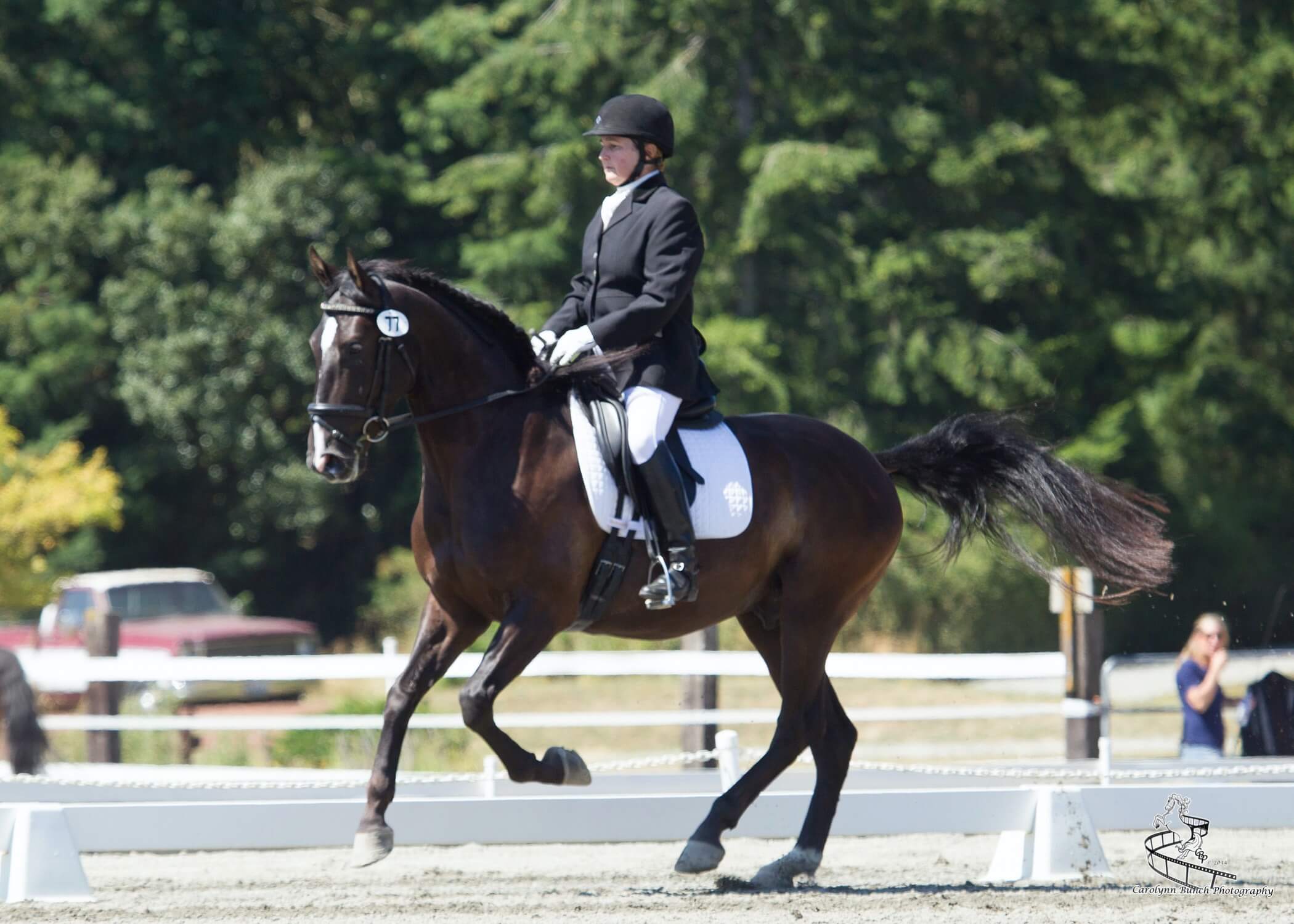
Kim Roe grew up riding on the family ranch and competed in Western rail classes, trail horse, reining, working cow, and hunter/jumper. She trained her first horse for money at 12 years old, starting a pony for a neighbor.
Kim has been a professional dressage instructor in Washington state for over 30 years, training hundreds of horses and students through the levels. In recent years Kim has become involved in Working Equitation and is a small ‘r’ Working Equitation judge with WE United.
Kim is the editor of the Northwest Horse Source Magazine, and also a writer, photographer, and poet. She owns and manages Blue Gate Farm in Deming, Washington where she continues to be passionate about helping horses and riders in many disciplines.
