



Some horses seem to gain weight just by looking at a bale of hay.
We call them easy keepers, and while it’s often said with a smile, carrying extra weight can sometimes signal a much bigger issue. Equine Metabolic Syndrome, or EMS, has become one of the most important health concerns horse owners need to understand because of its strong connection to laminitis.
The good news is that early recognition and proper management can make a tremendous difference.
Recognizing, Managing, and Preventing EMS
By Dr. Wendy Mollat
As a horse owner, you’re probably familiar with equine metabolic syndrome (EMS) by now. While the clinical signs of the syndrome have been around for decades, it’s only recently that researchers have given more definition to this condition. Below is basic information on EMS that all horse owners should be aware of – as early diagnosis is critical.
How do I know if my horse has EMS?
EMS is a metabolic and endocrine disorder in horses that can affect any age of horse, but generally occurs between 8 and 18 years of age. These horses are often referred to as “easy keepers.” Many researchers suspect that some types of horses are genetically predisposed to EMS, as the syndrome is over-represented in ponies, Morgans, Arabians and Paso Finos, to name a few. EMS is extremely important to understand due to its connection to laminitis, a chronic and sometimes fatal disease in the horse.
The three defining clinical signs of EMS, now commonly agreed upon by researchers and veterinarians, include:
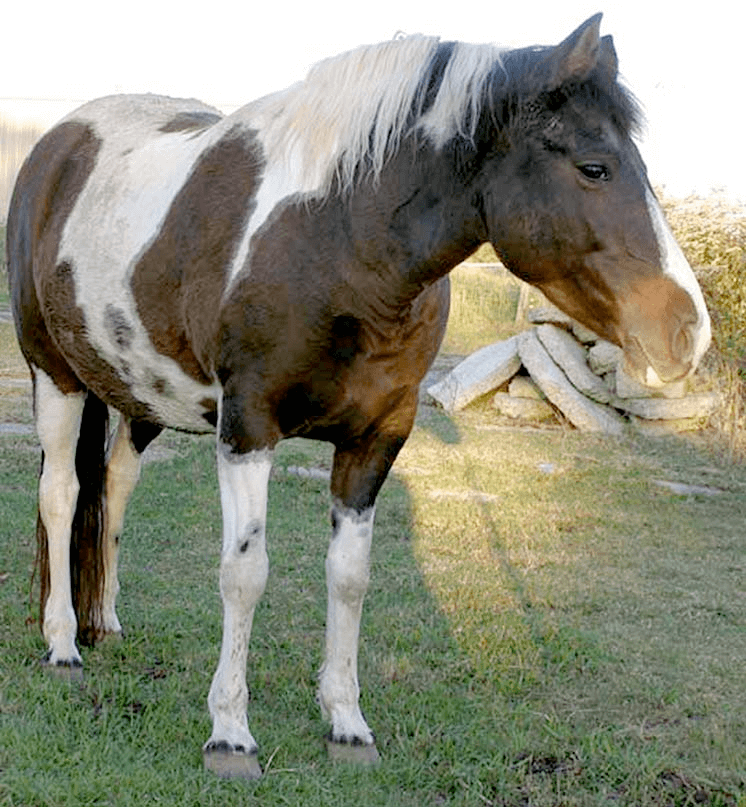
- Increased adiposity, or fat. The fat can be general (obesity) or regional. Common areas of regional adiposity include the neck (“cresty neck”), above the eyes, on the shoulders, loins, tailhead, and on the prepuce and mammary regions. However, it’s important to note that not all overweight horses have EMS and vice versa.
- Insulin resistance (IR). Insulin resistance occurs when insulin receptors become less effective, causing glucose levels to rise in the blood and triggering the pancreas to secrete more insulin. Research has shown that high levels of insulin can cause laminitis.
- Laminitis. Painful and debilitating, laminitis is inflammation of the digital laminae (tissue between coffin bone and hoof wall). Early episodes of laminitis in EMS cases are often mild and may be misinterpreted as “sore feet” or mild lameness.
How is EMS diagnosed?
Horses with generalized or regional fat deposition are at the highest risk. In many cases, a simple blood test to check insulin and glucose levels is diagnostic for IR. Unfortunately, the presence of laminitis (absent any other common causes, such as colic) is often the first clue that prompts owners to call their veterinarian. Any of the three clinical signs listed above, especially in combination, are a strong indicator of EMS, and your veterinarian should be consulted immediately.
To make an EMS diagnosis, veterinarians take into consideration a horse’s history, physical examination (especially body condition score), blood tests, and X-rays of the feet to check for laminitis. In the older horse, it is also important to rule out equine Cushing’s disease.
Diagnosing IR can be challenging. In many cases, the diagnosis can be made by checking fasting blood insulin and glucose levels (no food for eight hours prior to the test); high insulin with a relatively normal glucose is diagnostic.
How do you treat EMS?
Dietary changes and increased physical activity are key to managing EMS. Many owners unintentionally overfeed their horses. Animals with EMS should have limited access to pasture, if any, and be fed a low-sugar, low-starch diet.
Horses with EMS should be exercised daily if possible. If your horse is suffering from laminitis, consult your veterinarian before starting an exercise program.
EMS can often be successfully managed with these lifestyle changes, reducing the severity and/or frequency of laminitis. The prognosis is less favorable for horses with multiple bouts of laminitis or major structural damage to the laminae, further emphasizing the importance of early detection.
What about prevention?
Regular exercise goes a long way to maintaining a healthy body. Feed your horse a balanced diet, forage-based and with no concentrates or molasses. Don’t allow your horse to become overweight. Work with your veterinarian to identify proper body weight and to create a diet and exercise plan for your horse.
About the author
Wendy Mollat, DVM, DACVIM: Dr. Mollat received her veterinary degree from Oregon State in 2002. She completed her internship at Pilchuck Veterinary Hospital in 2003 and her residency at University of California at Davis in 2006. She is board certified in large animal internal medicine. More information: www.pilchuckvet.com.
Originally published at https://nwhorsesource.com/a-primer-on-equine-metabolic-syndrome/

Board-Certified Internal Medicine Specialist, Large Animal Pilchuck Veterinary Hospital. Dr. Wendy Harless Mollat grew up in Bend, Oregon, where she was actively involved in riding and training hunter/jumper and dressage horses. She graduated with her DVM from Oregon State University in 2002 and went on to complete a one-year internship in equine medicine and surgery at Pilchuck. Dr. Mollat followed her internship with a three-year residency in large-animal medicine at UC Davis and became board-certified by the American College of Veterinary Internal Medicine. In September 2006, Dr. Mollat returned to Pilchuck, where she now leads the equine referral hospital. Her areas of focus include biosecurity, neurological diseases, neonatology, equine gastric ulcer syndrome, and camelid (alpaca and llama) medicine.
