

Why towing capacity alone isn’t enough—and the weight ratings every horse owner should check before hitching up.
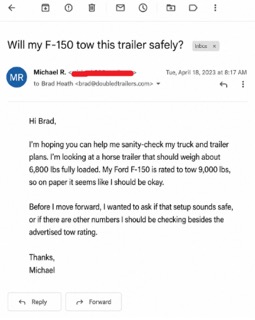
A few years ago, a client named Michael sent me an email. He thought he had the truck question figured out.
He was planning a horse trailer that, fully loaded, would weigh about 6,800 pounds. His Ford F-150 was rated to tow 9,000 pounds.
On paper, that sounded like plenty of truck. Then we looked at the hitch.
The hitch on Michael’s truck was rated for a maximum trailer weight of only 5,000 pounds, and a maximum tongue weight of 500 pounds. The trailer he wanted would put considerably more weight than that on the hitch. Suddenly, that 9,000-pound tow rating didn’t mean a whole lot. We’ll come back to Michael in a minute.
I see versions of this situation all the time. Someone buys a brand-new truck after hearing, “It can tow 10,000 pounds,” and naturally assumes that means anything under 10,000 pounds is fair game. Unfortunately, towing a horse trailer doesn’t quite work that way.
Why Your Truck’s Tow Rating Isn’t Enough
Truck manufacturers love a big tow-rating number. It looks great in a commercial!
But when you’re hauling horses, that number is just one piece of the puzzle.
You also need to know the truck’s payload capacity, Gross Vehicle Weight Rating (GVWR), Gross Combined Vehicle Weight Rating (GCWR or GCVWR), Gross Axle Weight Rating (GAWR), and the rating of the hitch itself. That sounds like alphabet soup, I know. But the basic idea is pretty simple: every part of the combination has a limit.
Your truck may have enough power to pull the trailer but not enough payload to carry the people, gear, and tongue weight pushing down on it. Or, the truck may be capable, but the factory hitch is not. The entire towing set up is only as strong as its weakest link.
That’s why I would not recommend buying a tow vehicle based on a vehicle salesperson saying, “Oh yeah, it’ll pull that.” Ask to see the actual numbers for the exact truck.
Calculate Your Horse Trailer’s Loaded Weight
Another mistake is comparing the truck’s tow rating to the empty weight of the trailer.
Unless you’re planning to leave your horses at home, that isn’t the weight you’re actually towing.
Think about everything that goes with you on a normal trip: horses, saddles, tack, hay, water, feed, show equipment and whatever else finds its way into the dressing room. Then add the passengers and gear in the truck. It adds up faster than people expect.
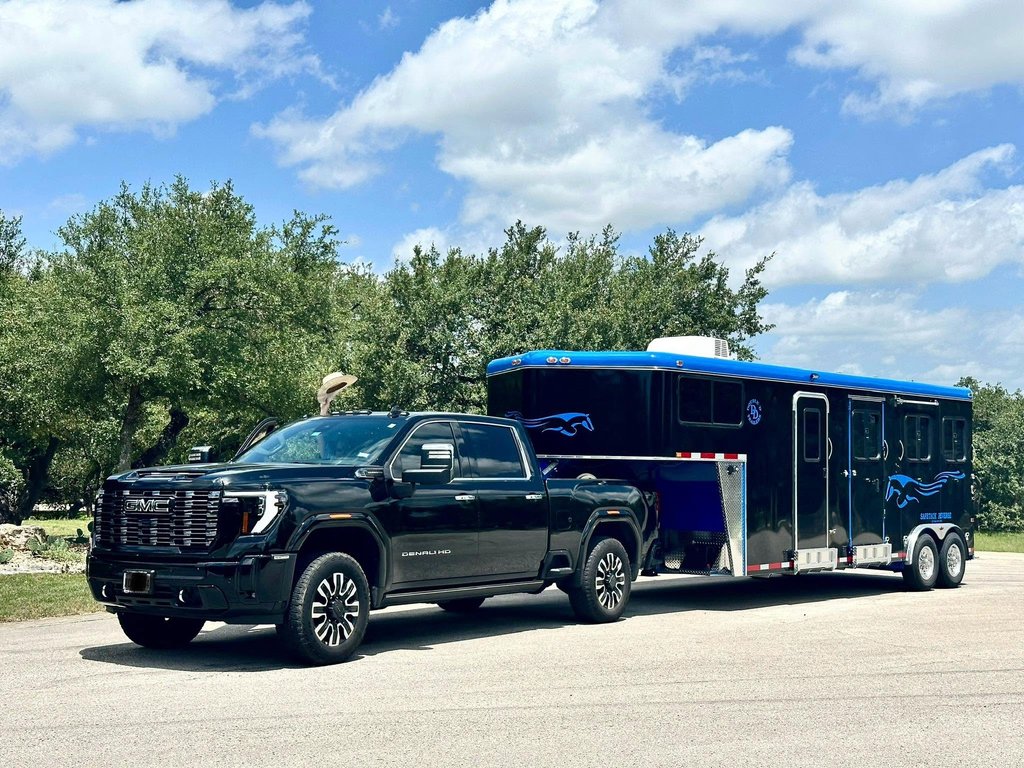
If you really want to know what your setup weighs, put it on a scale the way you normally travel.
Truck stops and public scales make this fairly easy. You can weigh the loaded truck and trailer together, the truck by itself, and the trailer itself. Those numbers give you something much more useful than an estimate from a brochure. I’d rather know what I’m actually towing than what I think I’m towing.
Horse Trailer Tongue Weight: What You Need to Know
Tongue weight is simply the amount of trailer weight pressing down on the hitch of a bumper pull. If you could somehow walk up to the coupler and lift the front of the trailer, that’s the weight you’d be holding. And it matters.
Too much weight on the rear of the tow vehicle can affect steering and handling. More importantly, the hitch and ball mount have to be rated to carry that load.
Remember Michael from the beginning? This is where he ran into trouble.
His truck could theoretically pull more weight than the trailer weighed, but the hitch installed on the truck could not safely handle the trailer he wanted.
He had a few choices. He could change the trailer, change the hitch if the rest of the truck’s ratings allowed it, or change the tow vehicle. What he couldn’t safely do was ignore the numbers because the truck had a big advertised towing capacity.
Do You Need a Weight-Distribution Hitch?
Weight-distribution hitches can be useful on some bumper pull combinations. A weight-distribution hitch helps transfer some of the load off the tow vehicle’s rear axle and distribute it more evenly between the tow vehicle and trailer axles. But a weight-distribution system isn’t a magic fix for an undersized truck or an overloaded setup.
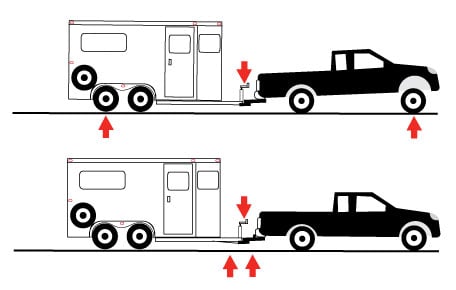
You still have to stay within the ratings of the tow vehicle, axles, hitch and equipment you’re using. If the numbers don’t work, they don’t work. That’s a much better thing to discover in your driveway than at 60 miles per hour with two horses behind you.
Should You Choose Your Horse Trailer or Truck First?
This is probably one of the recommendations I make that surprises people most: when you have the flexibility, figure out the horse trailer first and buy the tow vehicle second. Here’s why. A good horse trailer may stay with you for 20 years or more. Trucks tend to come and go much faster.
If you start with a truck that isn’t really suited to your long-term hauling needs, you can end up designing the entire trailer around a vehicle you may trade in a few years from now.
I’d rather see someone figure out what they actually need for their horses first: how many horses, what stall size, bumper pull or gooseneck, storage, living quarters and so forth. Once you know the trailer’s expected weight and hitch requirements, you can shop for a tow vehicle that safely handles it. Of course, not everybody wants to replace a perfectly good truck.
If you’re keeping the truck you already own, that’s fine. Just reverse the process. Find the exact ratings for your vehicle first and make those numbers the boundary for the trailers you consider.
Before You Hitch Up, Know Your Towing Limits
You don’t need to become a towing engineer to haul horses safely. You do need to be willing to look past the big number printed in the truck brochure.
Know what the trailer weighs when it’s loaded. Know what your truck can actually carry and tow. Know the tongue or pin weight. Check the hitch and ball mount ratings. Make sure the combined weight stays within the truck manufacturer’s limits.
And if something doesn’t make sense, ask somebody to walk through it with you before you buy.
Michael caught his mismatch before he headed down the road. That’s the best possible time to find a problem. Because when there’s a horse standing in the trailer behind you, “I think my truck can handle it” isn’t nearly as reassuring as knowing it can.
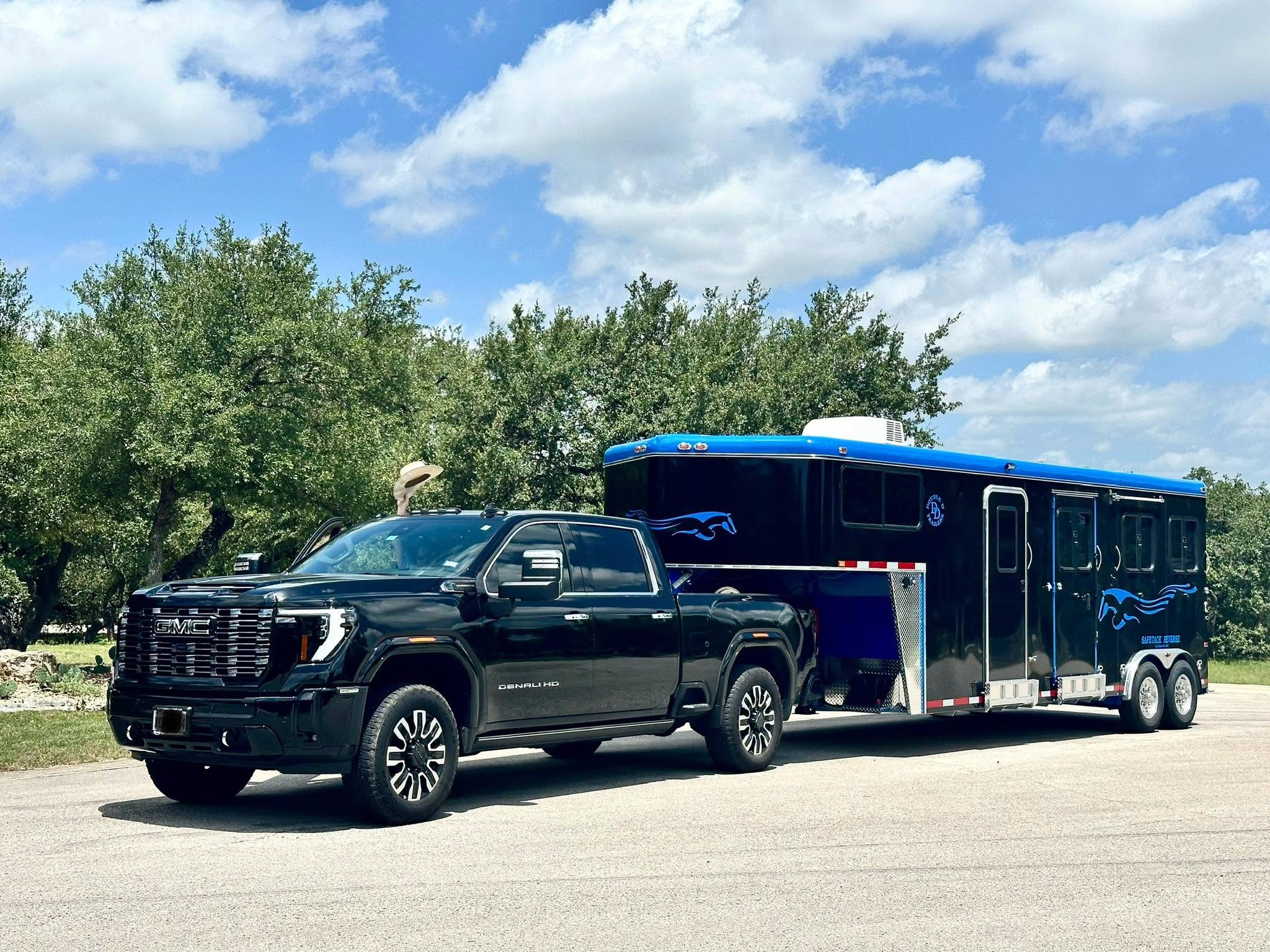
Images supplied by Double D Trailers
Want to learn more?
We send the book out for free. Just fill out a request form at this link. doubledtrailers.com/freebook

Brad Heath is the founder of Double D Trailers, a factory-direct custom horse trailer manufacturer, and the author of The Honest-to-Goodness Truth About Horse Trailers. Visit his website at DoubleDHorseTrailers.com
