



I’ll be honest: cleaning tack has never been my favorite barn chore.
Like a lot of horse owners, I’d much rather spend my time riding, driving, trailering out, or simply enjoying my horses than sitting down with a bucket, sponge, and saddle soap. Somehow tack cleaning always seems to slide to the bottom of the list.
But every time I finally make myself do it, I’m reminded why it matters.

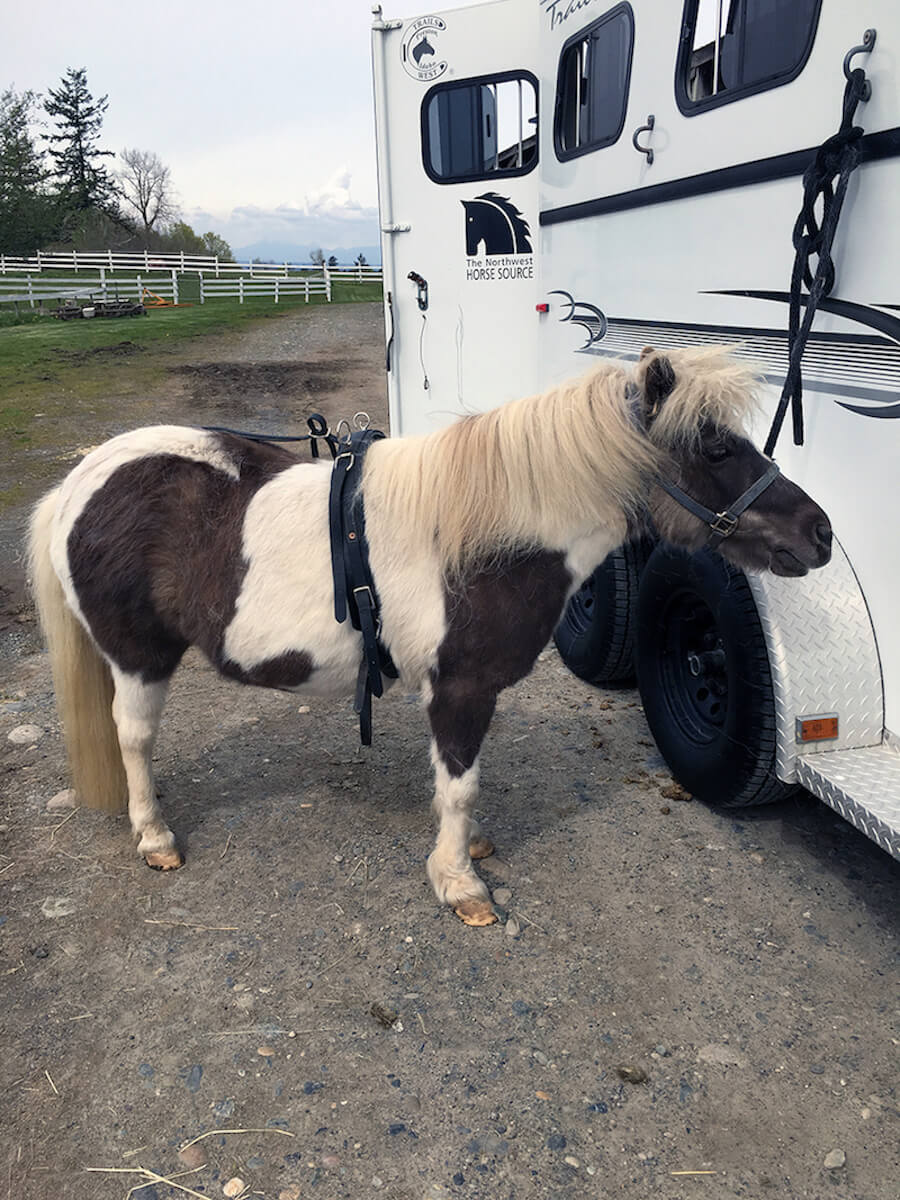
Recently I was gifted a harness for my miniature horse, Chloe. It’s a beautiful, heavy-duty leather harness that was in need of some TLC, so I finally sat down to clean and condition the leather. I’ve started taking driving lessons and discovered at my first lesson we couldn’t even get the buckles undone. I procrastinate when it comes to leather care. I feel as though I barely get time to ride or be with the horses, so tack care has taken a serious back seat.
I sat down in the bright sunshine to start on my task and looked at the endless pile of leather harness. I was afraid to take it apart for fear I’d never figure out how to put it back together. I finally gave in, as there was no way to really properly clean it otherwise.
As I started scrubbing the mold and grime from the leather I began to appreciate some quiet time to just be present doing a simple yet necessary task. The sun nourished my soul along with the birds singing their delight at the warmth of the day. The breeze kept me chasing a few items such as sponges and containers, but it was an enjoyable afternoon.
I decided to do a test with a tried-and-true leather harness oil and saddle soap (Fiebings) on the first part of the harness per my instructor’s recommendation. We’re going to use the bridle, breast collar, cinch and crupper for the first test. Second test I will be using a product from one of our clients, Sterling Essentials. I’ll let you know how it works on the harness. It worked beautifully on one of my bridles so I’m excited to try it on the breeching.
Care of our tack and equipment is an important part of caring for our equine friends. If you’ve ever had a piece of gear break from neglect you understand perfectly.
I’m excited to announce the winner of the Farm Design Contest from our March issue. Congratulations to Whatcom County horsewoman Robin, winner of the design competition sponsored by Northwest Horse Source and Whatcom Conservation District. Robin lives with her four horses on five acres and is excited to leverage her small farm grant to redesign the barn area and bring overgrazed pastures back to life. Stay tuned as we follow Robin’s progress installing these practices for healthy animals, healthy pastures, and healthy communities in Whatcom County. Thank you, Whatcom Conservation District, for the technical and financial support for these projects.
We cannot do everything at once, but we can do something at once.”
Calvin Coolidge – 1872-1933, 30th U.S. President
Originally published at https://nwhorsesource.com/tack-cleaning/
Owner / Publisher | Canfield Certified Trainer
Karen Pickering is a lifelong horsewoman and the founder of The Northwest Horse Source, which began in 1995 as a small equine newsletter and grew into a respected industry publication. With more than 30 years of experience serving the horse community, Karen now focuses on helping equine businesses and organizations build visibility, credibility, and lasting relationships through online marketing, digital promotion, and educational platforms.
As a Canfield Certified Trainer, she blends proven success principles with real-world industry experience, supporting both businesses and individuals navigating change in today’s digital landscape. Karen remains deeply connected to the horse industry and is passionate about serving the community she has helped build for over three decades.
