



The Hard Horse Who Taught Me to Use My Seat
Recently, while judging a Working Equitation show, I watched a young woman ride a talented but spicy black gelding around a course of obstacles. The horse appeared happy, with ears pricked, a quiet tail, and a swinging back. He eagerly cantered from one obstacle to the other, willingly negotiating each one. His rider managed to keep his eagerness under control—but just barely. His athleticism and lovely gaits, and her deftness at keeping him under control, resulted in the pair receiving decent scores for their efforts.
The rider used an unusual and somewhat severe (but legal) bit to control the horse, which worried me, and I winced a few times when I saw his tongue come out to avoid the bit’s pressure and lowered her scores accordingly. Her riding was good, but not great; she was a “seat-of-the-pants” young rider who got the job done but needed to learn to use her seat more effectively to avoid using so much hand (and the harsh bit).
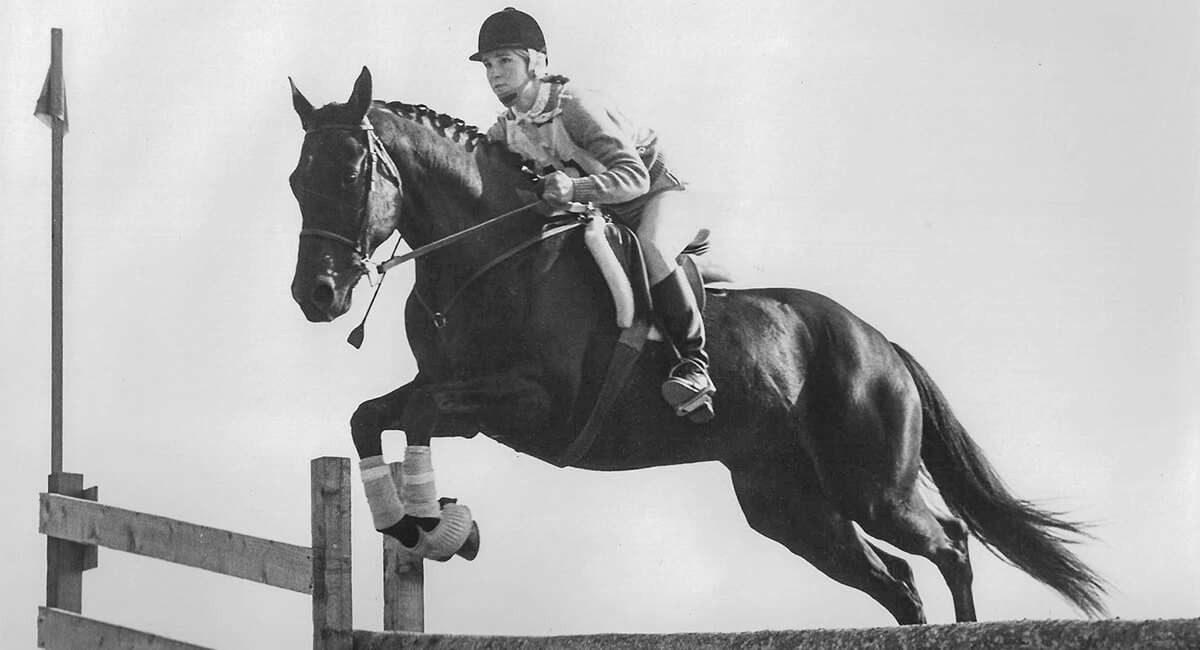
The pair reminded me of myself and my horse, Sailor, a running Quarter Horse I purchased when I was 17, who was one of the most athletic horses I’ve ever ridden. He was way too much horse for me at the time; I’d ridden all my life and had good instruction, but I had no idea how to control his excessive enthusiasm.
Sailor was started at 18 months and raced successfully throughout California until he was 4-1/2 years old. I purchased him after he retired from racing as a 5-year-old stallion and got into trouble so many times that I was forced to seek help from many instructors and clinicians.
Throughout the years he won many events and earned dressage accolades but mostly I think of him as the most influential teacher I’ve had in my life. The first few years I owned him he’d dump me, leaving me far from home in cattle pastures, woods, orange groves, and logging roads. I’d walk the miles home, following his hoof prints and praying he’d be okay when I found him.
Eventually, I learned how to ride his signature rear, spin, leap, and buck. I learned how to stay out of his face, ride from my seat, and recognize when he was becoming insecure in whatever environment I’d thrust us into.
He was never lame, never sick, and died suddenly at 28 while playing in the field at Blue Gate Farm. Sailor taught me a lot in the 23 years I owned him, and I’m so very grateful.
See this article in the September 2025 Online Digital Edition:
September 2025
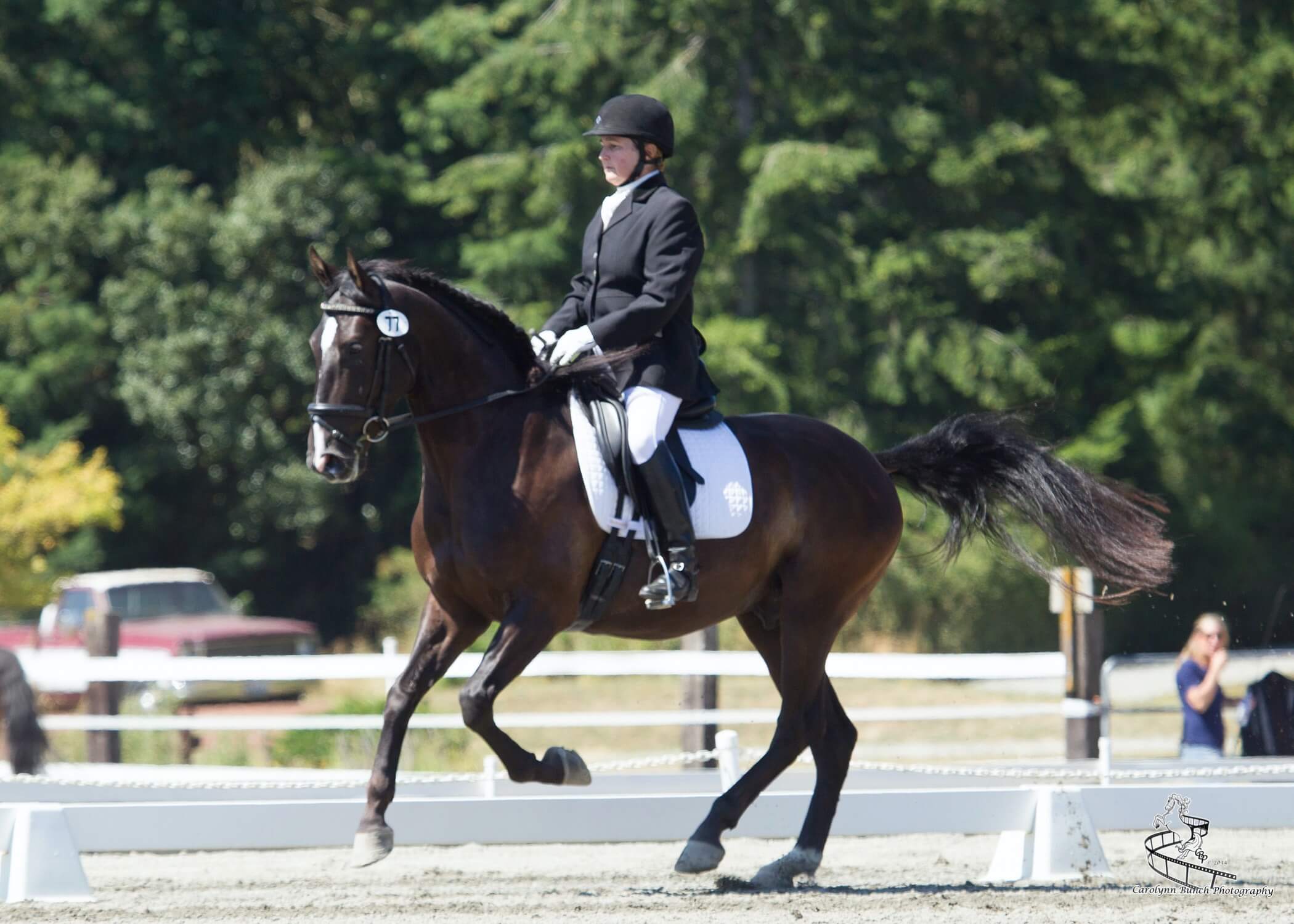
Kim Roe grew up riding on the family ranch and competed in Western rail classes, trail horse, reining, working cow, and hunter/jumper. She trained her first horse for money at 12 years old, starting a pony for a neighbor.
Kim has been a professional dressage instructor in Washington state for over 30 years, training hundreds of horses and students through the levels. In recent years Kim has become involved in Working Equitation and is a small ‘r’ Working Equitation judge with WE United.
Kim is the editor of the Northwest Horse Source Magazine, and also a writer, photographer, and poet. She owns and manages Blue Gate Farm in Deming, Washington where she continues to be passionate about helping horses and riders in many disciplines.
