





YouTube Tutorials Can Be Helpful, but They Don’t Replace In-Person Instruction
Social media can be useful; it connects us to neighborhood groups that let us know what’s happening in our community (is your power out too?) and keeps us in touch with long-lost friends from high school. I use YouTube tutorials to fix my lawn mower or tractor, prune my blueberries, catch a mouse in my house, or build a fence. But as we know, social media is changing the planet in ways that aren’t always positive.
In the equestrian world it’s becoming common for horse trainers to use social media as a money-making tool. YouTube, especially, is a way for trainers to supplement their living by selling “how-to” content to horse owners with promises to fix all kinds of training issues. This appeals to people who want to do it themselves as a time-or cost-saving strategy (like I do with my tractor). I myself have found motivation and insight more than once from online content, but there’s a problem emerging that worries me. Riders who forgo in-person help for online learning alone are missing the most important parts of the art of horsemanship: timing and feel.
So how do we learn timing and feel and how can we trust what we feel is correct? You learn these by doing, not watching, and by having a good instructor tell you right when you do it, “Yes, you’re getting it! Do you feel that? That’s good.”
We can’t trust our guesses in horsemanship. For example, when I was young, I bought and retrained an off-track Quarter Horse. He pulled my arms off, and since I was a dumb, penniless college student, I didn’t have the money to get help. At some point he became very light in my hands, and I liked how it felt because he wasn’t pulling anymore, but he was behind the bit and started to rear and spin. Eventually, I got some good instruction and learned this feeling was wrong, and a prelude to his belly-up maneuvering.
A clean flying change or a correct piaffe doesn’t feel like much of anything—each is subtle—but with good instruction, I learned the timing of the aids for those movements and what it felt like when my horse was performing them correctly.
There’s lots of good equestrian content out there on the web, and it can aid our learning, but be extremely cautious. It’s not all correct. And if you need help with a horse, or you want to advance your riding and learn to really feel, seek out a reputable instructor and set up some in-person lessons.
See this article in the October 2025 Online Digital Edition:
October 2025
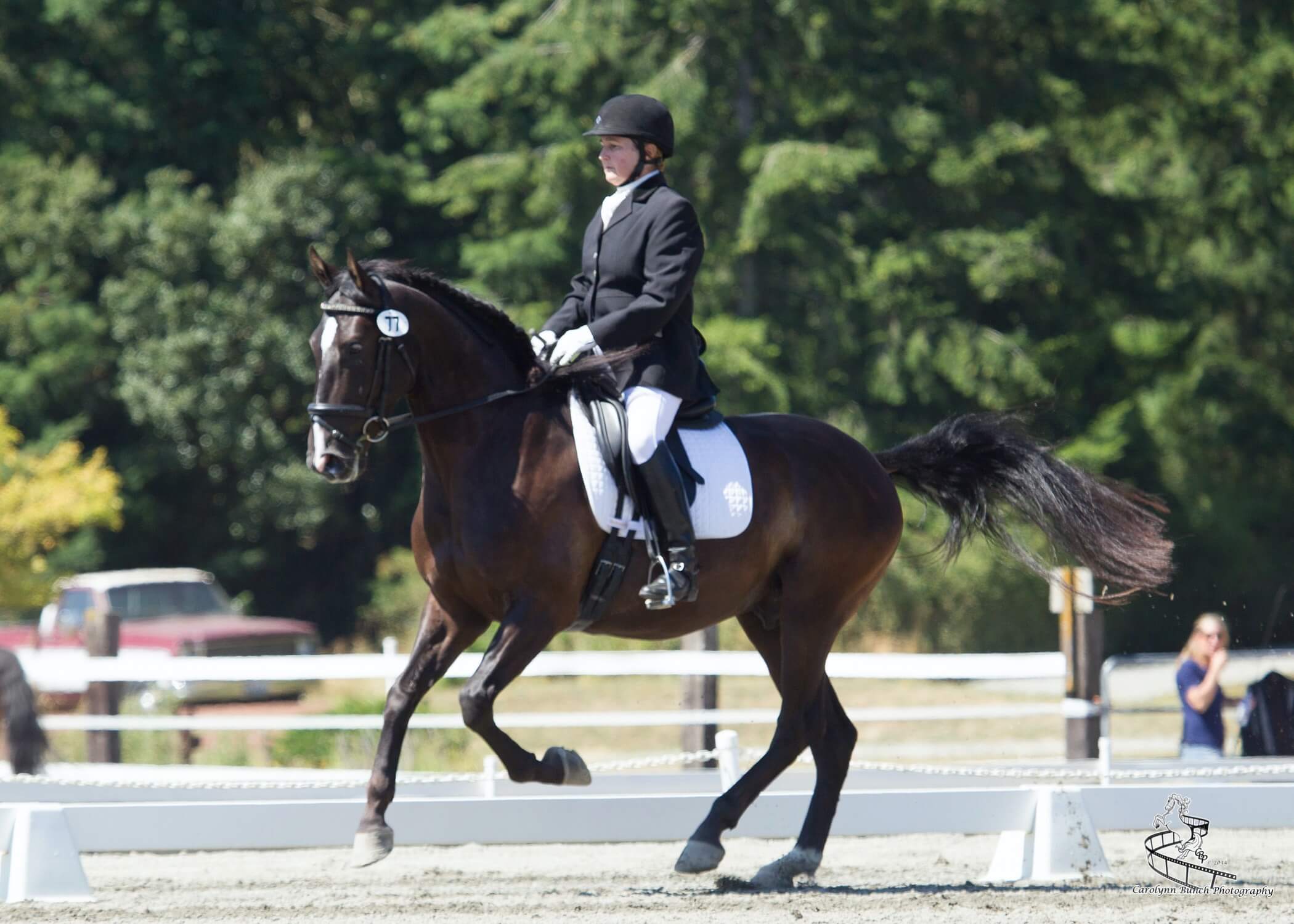
Kim Roe grew up riding on the family ranch and competed in Western rail classes, trail horse, reining, working cow, and hunter/jumper. She trained her first horse for money at 12 years old, starting a pony for a neighbor.
Kim has been a professional dressage instructor in Washington state for over 30 years, training hundreds of horses and students through the levels. In recent years Kim has become involved in Working Equitation and is a small ‘r’ Working Equitation judge with WE United.
Kim is the editor of the Northwest Horse Source Magazine, and also a writer, photographer, and poet. She owns and manages Blue Gate Farm in Deming, Washington where she continues to be passionate about helping horses and riders in many disciplines.
