


How to Help Your Horse Feel Safe
The most important characteristic of a safe, well-trained horse is trust. Horses who trust people are far less likely to behave in erratic, explosive, or aggressive ways and are a joy to handle and ride.
Creating trust in horses is the responsibility of the humans who raise and handle them. Horses never forget being treated poorly or unfairly, so winning the trust of a mistreated horse is much harder than receiving it from a horse who’s a blank slate. If you’ve owned or worked with a horse who doesn’t trust humans, you know how challenging it can be. The simplest chore, like blanketing or cleaning hooves, can become frustrating and dangerous.
Here are a few strategies and techniques to help gain a horse’s trust, whether you’re dealing with an untouched youngster or attempting to repair a damaged horse.
Help Them Feel Better Physically
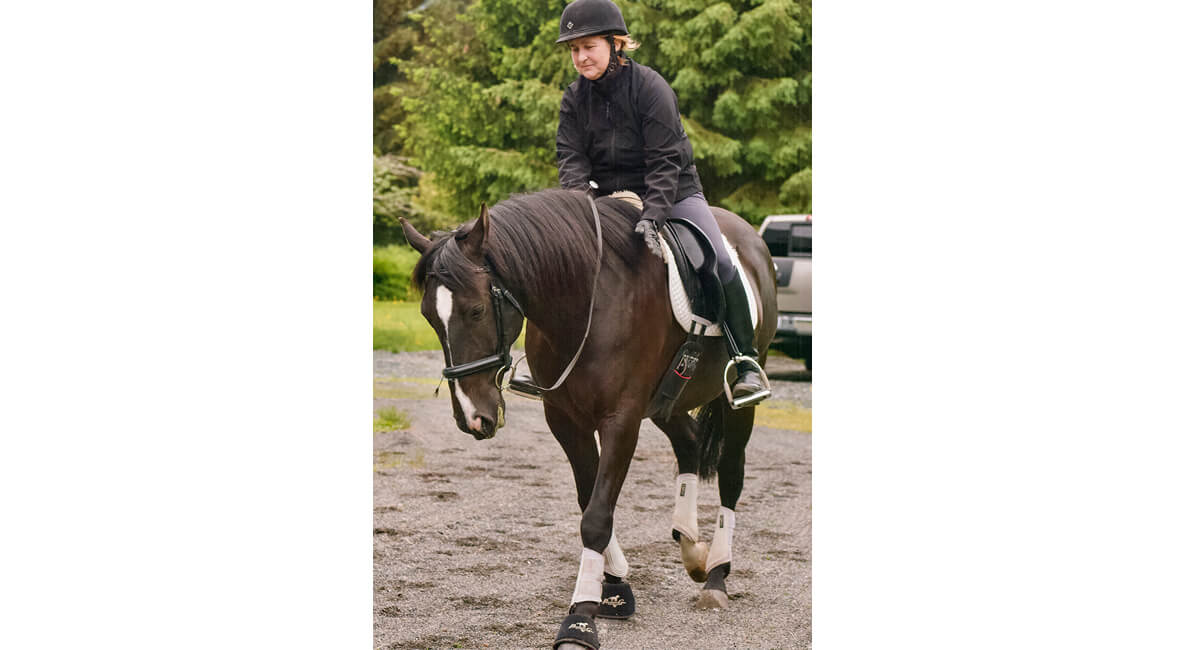
Although food treats can be a powerful bonding method for horses, I’ve found that helping them feel better in their bodies is even better for developing trust or as a reward. It can begin with a simple scratch in a place they can’t easily reach, like their belly or rear end. Scratching itchy foals as they lose their baby fuzz is one of the first ways we bond with them. Massage can erase fear. I’ve had mistrustful horses’ personalities completely change because of body work that alleviated their pain. And training with specific techniques that help a horse feel more balanced and supple (and doesn’t hurt) will create horses who look forward to being ridden.
Develop Your Horse’s Natural Curiosity
Horses are born with a natural desire to explore their world. Sure, some horses are bolder than others, but the innate desire to explore will aid training and is a potent way to develop trust. If you enter a field of happy yearlings you’ll soon be swarmed by curious, playful, baby horses nosing your clothes, shoes, and hair. If you scratch their itchy spots, they’ll follow you and become relaxed and confident in your presence. Hold out an object like a ball and they might initially move away, but then they’ll come back and explore it.
The “touch-it” game is one commonly used to help fearful horses: With your horse loose, hold out an object that’s not very scary, like a brush, and say, “Touch it.” Most horses will want to check it out with their muzzles and when they touch, you again say, “Touch it,” and immediately give them a treat. It doesn’t take horses long to learn this game, and you can soon advance to more frightening objects like umbrellas, plastic bags, or rain slickers. Essentially, the horse is doing a “job” for a reward.
When under saddle, if a horse becomes frightened of an object like garbage cans on the road, you can say, “Touch it,” and then reward. This quickly changes their fear into confidence and reminds them you have their back out in the scary world.
Liberty Work
Force might get a horse to do what you want, but force creates a chasm between you and your horse. When we put a halter on a horse, we are essentially forcing them to go with us, whether they want to or not.
Liberty work is a great way to test whether the bond you have with your horse goes beyond the “force” of a halter and lead rope. If you turn your horse loose, will he leave or stay with you? Liberty work is not trick training, but it does involve play, a powerful motivator. It’s learning as a human to be more like a horse (copying their movement) and how to be aware of your body language and energy and how it affects your horse.
Liberty work will help you observe and understand what your horse is telling you with his body. When your horse realizes that you really see and hear what he’s “saying”, he’ll feel safer in the world, and the trust between you will intensify. Liberty work can be slow and time-consuming, but it builds a special bond with your horse.
Positive Reinforcement
Positive reinforcement work, like clicker training, is a great way to develop trust in training. It almost always involves food treats, at least in the beginning, until the clicker noise can be substituted for the food. Again, this work can be slow and methodical in the beginning, but training accelerates as horses catch on to the idea of seeking the answer to questions. Because it rewards the try, horses are more likely to offer what we desire. It can be especially powerful for horses who need to be retrained.
Don’t be a Bully (or a Door Mat)
Horses enjoy and trust confident people. They don’t suffer fools well, whether equine or human. Confident people make horses feel safe. Go boldly forward with your training and seek professional help when needed. Remember, horses are very forgiving of our mistakes and recognize when our hearts are in the right place.
But confidence is different than being a bully. No one, not man or beast, is motivated to be better by shaming, punishment, or ridicule, though humans seem programmed to treat others this way. Horses (and people) can be coerced to perform out of fear, but resentment is the result, and trust is lost.
When training your horse, think about how it feels to be forced or punished. Then think about what makes you feel safe and what motivates you. That is the place to start when training a horse.
See this article in the November 2025 Online Digital Edition:
November 2025
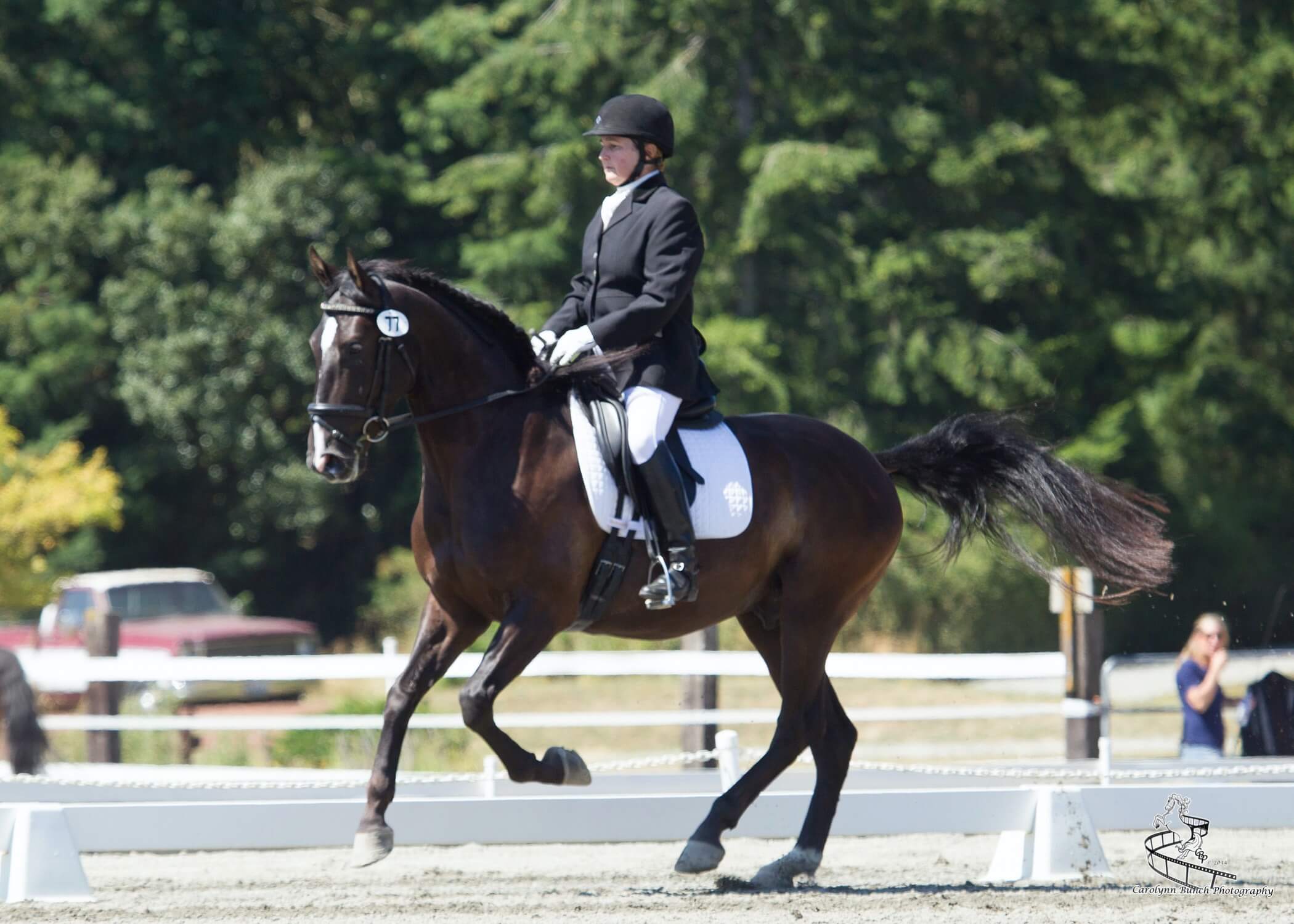
Kim Roe grew up riding on the family ranch and competed in Western rail classes, trail horse, reining, working cow, and hunter/jumper. She trained her first horse for money at 12 years old, starting a pony for a neighbor.
Kim has been a professional dressage instructor in Washington state for over 30 years, training hundreds of horses and students through the levels. In recent years Kim has become involved in Working Equitation and is a small ‘r’ Working Equitation judge with WE United.
Kim is the editor of the Northwest Horse Source Magazine, and also a writer, photographer, and poet. She owns and manages Blue Gate Farm in Deming, Washington where she continues to be passionate about helping horses and riders in many disciplines.
