




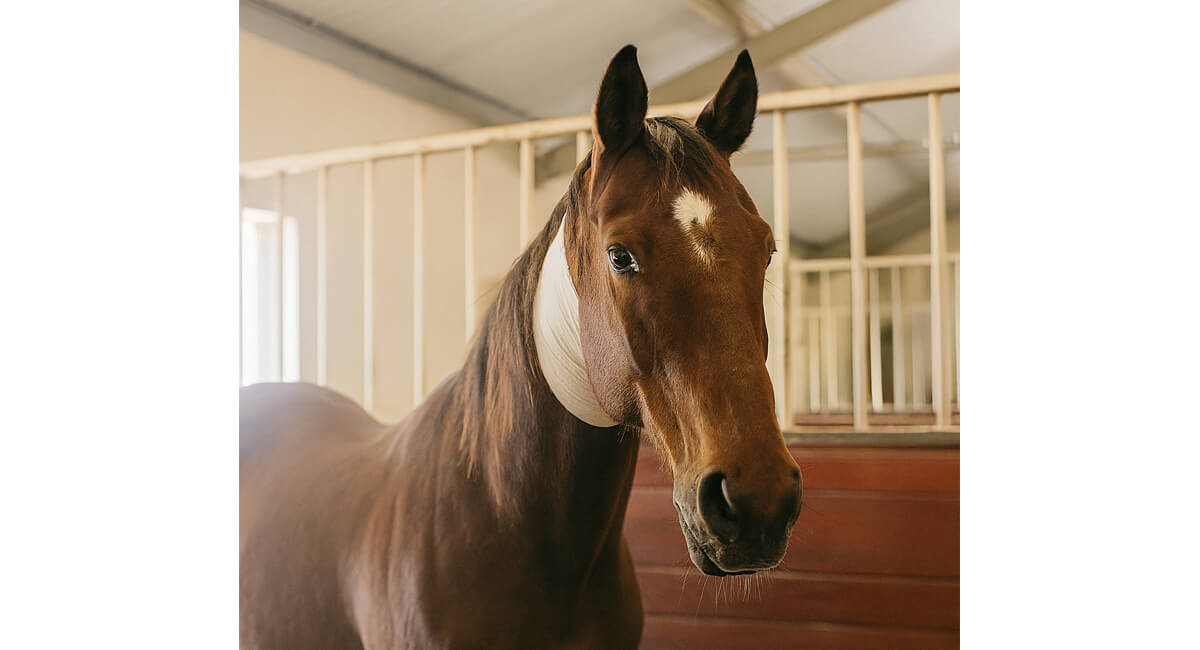
New Pain Relief Protocol Developed by EicOsis May Help Horses Survive Laminitis
Observing and examining what nature provides has kept veterinarians and physicians busy for centuries. Discoveries made in soil and from the insects that crawl around on it will continue to make life immeasurably better for the animal kingdom and mankind.
We can thank Dr. Bruce Hammock, Distinguished Professor at the University of California Davis and Chairman of EicOsis, Inc for advances in non-opioid pain relief for equine laminitis and arthritis in companion animals, and for humans, Parkinson’s, Alzheimer’s, multiple sclerosis, spinal injuries and other neuropathic ailments.
We can also thank Dr. William C. Campbell of Merck and Mr. Otashi Omura of the Kitashi Institute who jointly received the 2015 Nobel Prize in Physiology and Medicine for creating and developing ivermectin which remains on the World Health Organization’s list of essential medicines since 1987. These scientists and their findings continue to benefit the global community.
EicOsis, Inc
A California based biotechnology company, EicOsis is focused on developing non opioid, analgesic solutions for inflammatory and neuropathic pain in animals and humans. Dr. Bruce Hammock and Dr. Cindy McReynolds co-founded EicOsis in December 2011. The patented technologies of EicOsis in both animal and human health are based on the research conducted at Hammock’s Laboratory at UC Davis.

Animal trials are being planned for later this year in California. Human trials are continuing in Augusta, Georgia and Davis, California.
Dr. Hammock shares his journey that began five decades ago: “It was 1975 when I was seeking solutions to chronic inflammation. I discovered an enzyme while studying how caterpillars become butterflies. That eureka moment 50 years ago was the beginning of learning what soluble epoxide hydrolase (sEH) can do for both animals and mankind suffering with debilitating pain from inflammation. I wanted to see what sEH’s function had in species that didn’t metamorphosize. Simply said, I identified that it degrades anti-inflammatory lipid epoxides, and these lipid epoxides act as a balance to inflammatory lipids.
“It’s the gift from nature that just keeps on giving. Harnessing it and applying it to specific conditions affecting horses is just the beginning of what might be possible.”
When giving talks to students, Dr. Hammock often tells them that science is full of surprises, and it moves at its own pace.
“Although it’s been a long time coming, we are at the cusp of seeing what this enzyme can do. Our research confirmed that the enzyme occurs in plants and in mammals. For horses, dogs and cats suffering with inflammatory ailments, the promise of sEH is priceless,” said Hammock.
Because of the design of a horse’s foot, Hammock’s patented therapeutic is especially effective in treating laminitis. The condition is a nightmare for the horse, its owner and the veterinarian as the severe inflammation in the hoof causes excruciating pain, tissue destruction and morbidly high blood pressure. Sadly, laminitis is fatal in 70% of cases.
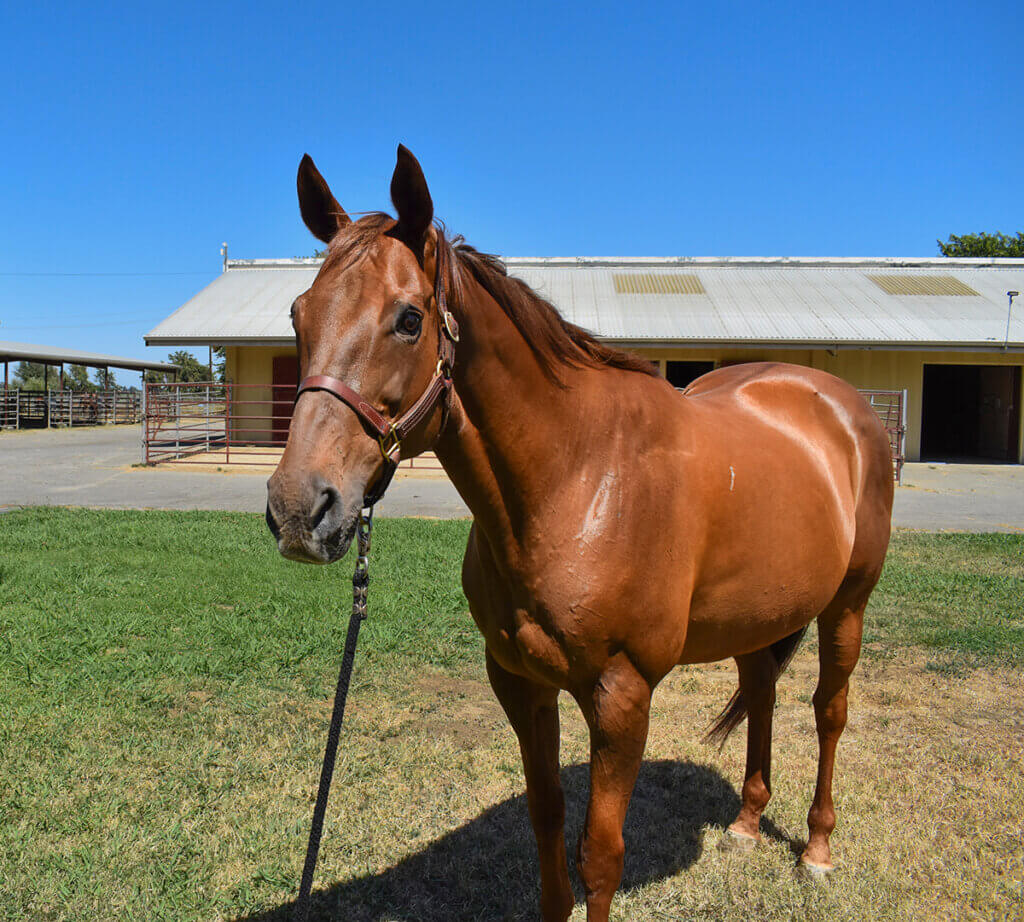
The Story of Hulahalla
“Hulahalla was donated to UC Davis Veterinary School after her career in racing ended,” said Hammock. “A descendant of Triple Crown Winner Seattle Slew, Hulahalla is a beautiful thoroughbred with a lovely temperament. She developed laminitis and was in pain for over eight days. Traditional treatments were not working. She didn’t respond to steroids or gabapentin. Hulahalla was lying down in her stall, unable to stand. There wasn’t much hope for her. Veterinarian and colleague Dr. Alonso Guedes used my compound t-TUCB as the last chance option. After receiving the first dose, Hulahalla was standing in her stall three hours later. She remained standing most of the day and started eating her hay and drinking water. In just a matter of days, the horse made a complete recovery.”
Hulahalla went on to live her best life teaching students to ride at the UC Davis Equestrian Center and becoming a doting mother to her foals. This lucky mare is still thriving and is a member of the herd at the UC Davis Center for Equine Health.
How does t-TUCB work?
Soluble Epoxide Hydrolase is a key regulatory enzyme involved in the metabolism of fatty acids. It regulates a new class of natural chemical mediators which in turn regulates inflammation, blood pressure and pain.
While studying the metamorphosis of caterpillars into butterflies, Hammock saw that the enzyme prevented the larvae from becoming adults. In essence, the enzyme stops the aging process. Applying that methodology to inflammation and stopping pain is Hammock’s patented process for treating laminitis in horses, arthritis and joint pain in companion animals, and treating pain from Parkinson’s Disease, Alzheimer’s, multiple sclerosis, spinal cord injuries, diabetes and other diseases resulting from too much inflammation in humans.
For the horse community, Hammock says that EicOsis has a new patented formulation that extends the proprietary control drug t-TUCB. Equine clinical trials are being planned for this year in California.
Human Pain
EicOsis’ emerging drug candidate for human pain is the patented EC5026 which restores the body’s natural ability to heal safely without narcotics or side effects. Phase 1 clinical trials were completed in July 2024. Continued clinical trials are now taking place in Georgia.
Getting any drug to the marketplace takes time, dedication, continuous funding and perseverance. When asked what motivated her to bring the goals of EicOis to fruition, Dr. McReynolds said, “I’ve been fortunate that treatment options were available for illnesses affecting myself and my family, but I realize that my life would be forever altered if this was not the case. I have had close friends suffer from incurable disease, go into bankruptcy to afford care for their loved ones, or experience devastating emotional loss when companion animals succumb to acute conditions like laminitis, or deteriorate from chronic painful conditions like arthritis.
“I am passionate about improving the physical and emotional lives of humans and their animals and hope that our company can provide affordable, safe and effective treatments for severe and unmet medical and veterinary needs.”
Dr. Hammock says that his motivation stems from one of the most exciting moments of his life. “I got a call from a vet at 4:00 a.m. saying that they were going to put down a horse suffering terribly from laminitis and did I want to try our drug as a last resort. I went to the barn and a lovely animal was down in pain and ready to be euthanized. We gave her the soluble epoxide hydrolase inhibitor designed for horses and in minutes, the horse had gotten to her feet. In an hour, she was walking and the next day trotting.”
The History of Ivermectin
A true hallmark of successful zoonotic research, ivermectin’s immense value and efficacy to both animals and humans continues with its application into various diseases. It all started with a partnership that led to international recognition and the improvement of hundreds of millions of lives, both animal and human.
In December 2015, Merck parasitology specialist and veterinary scientist Dr. William C. Campbell and Kitasato Institute microbiologist/bioorganic chemist Satoshi Omura shared the Nobel Prize in Physiology and Medicine for creating ivermectin.
Omura sought new sources of pharmaceuticals within nature and found a bacterium in a soil sample by a golf course near Tokyo that produced compounds that impeded nematode worms. Campbell started testing the soil samples as a possible treatment for worms and identified specific compounds that could be developed as drugs for livestock. This was the beginning of the easy-to-use ivermectin paste wormer and a welcome alternative to tube worming.
Pharmaceutical giant Merck began its commercial marketing of ivermectin in 1981. Sales skyrocketed and ivermectin became the best-selling veterinary medicine in the world. By 1986, ivermectin was registered in 46 countries for parasite control in cattle, sheep and horses.
Ivermectin was heralded worldwide by farmers, ranchers, and horsemen as it was over twenty times more effective than existing protocols for parasites. Today, we use it a few times per year without needing our veterinarian to supervise us. Ivermectin’s use in livestock has made a huge impact on agricultural economics. For the performance horse, ivermectin is the preferred way to prevent parasite damage.
John Madden, renowned horse trainer and husband of American Gold Medalist Beezie Madden, said, “We use ivermectin on our horses here at John Madden Sales, along with other products recommended by our veterinarians. Ivermectin has certainly been valuable to us as tube worming was no fun and we were always worried that it might hurt the horses.”


The human use of ivermectin started with Campbell directing intense research studies at Merck Laboratories on its possible effect on onchocerciasis, known as river blindness. The deadly larvae come from infected black flies that breed in fertile agricultural areas around rivers in Africa, Middle East and Latin America.

Campbell and colleague, the late Dr. Mohammed Aziz, collaborated with the World Health Organization to begin trials in West Africa that proved ivermectin’s effectiveness against river blindness. Merck committed to donating ivermectin also referred to as mectizan for as long as needed to eradicate the disease. Merck also partnered with The Carter Center to donate ivermectin in Colombia, Mexico and Ecuador where river blindness has now been eradicated.
Dr. Gregory Fliney, a comprehensive ophthalmologist at ICON Eye Care in Denver, Colorado said, “Ivermectin has been a transformative medication in the field of ophthalmology. Its widespread use in mass drug administration programs has dramatically reduced the burden of onchocerciasis, or river blindness, preventing countless cases of vision loss and profoundly improving quality of life in endemic regions. More recently, its application in managing Demodex blepharitis has offered a valuable therapeutic option for common and often underdiagnosed cases of ocular irritation. Few medications have had such a broad and lasting impact on both global eye health and public health at large.”
By 1998, Merck further committed to donating ivermectin for profoundly debilitating lymphatic filariasis also known as elephantiasis in Africa and Yemen which co-exists with river blindness. Today, ivermectin is used for elephantiasis throughout Africa, Pacific Islands, Latin America and the Caribbean.
Now in their senior years, Campbell and Omura are enjoying their retirement.

Steven A. Nadler, Distinguished Professor and Chair of the Department of Entomology & Nematology at UC Davis speaks fondly of Campbell. “Bill is an amazing person. I got to know him when I was the president of the American Society of Parasitologists. He frequently came to our meetings where he donated several of his paintings of worms to raise funds for students. He was a true game changer as he was at the forefront of veterinary medicine with ivermectin.
“Bill was the person at Merck who championed going beyond animal diseases. His development of ivermectin in collaboration with Omura resulted in many very important improvements in veterinary parasite control and prevention, and substantially accelerated programs to control onchocerciasis and lymphatic filariasis. As a member of the American Society of Parasitologists, Bill has been an inspiration to students both for his scientific accomplishments and his efforts to promote the development of young scientists in the field.”
When asked about ivermectin’s role in extending the lives of performance horses, Nadler said, “Any drug that helps eliminate the things that wreak havoc on animals is bound to have an impact on their overall health and longevity.”
Ivermectin Today
The use of ivermectin continues to evolve. Physicians at both the Mayo Clinic and City of Hope Cancer Center are researching its use on specific cancers.
Dr. Rhoel Dinglasan at the University of Florida College of Veterinary Medicine and Dr. Brian Foy, Laboratory Principal Investigator at Colorado State University College of Veterinary Medicine are both researching the use of ivermectin for West Nile virus and malaria.
Currently, Foy’s study uses ivermectin in bird seed for small birds such as swallows and finches. The birds eat the seed which is harmless to them but deadly to the West Nile virus carrying mosquitoes who bite the birds.
Ivermectin continues to be an affordable safeguard from damaging parasites that thrive during the active show and rodeo seasons. As scientists continue to ponder the deadly role of parasites in zoonotic diseases and what ivermectin might be used for in the future, Dr. Campbell and Mr. Omura leave a legacy for which we can all be thankful.

About EicOsis
EicOsis develops non-opioid treatments for inflammation and pain in animals and humans by restoring the body’s natural ability to heal. Ongoing research on protocols for equine laminitis, Parkinsons, Alzheimer’s and spinal cord injuries are nothing short of miraculous.
Contact: Dr. Cindy McReynolds, [email protected] or (530) 338-0070
Author Margie Sloan Bio
Margie Sloan is a lifelong seeker of truth and writes about animal advocacy and political wrongdoing. Her interviews have taken her from her roots in Michigan to Washington, D.C., Florida, Colorado, California, Minnesota, Canada, China, Morocco and Ireland. Margie’s work has been published in myriad newspapers and magazines including FBI Investigator, Palm Beach Post, Fort Lauderdale Sun Sentinel, Miami Herald, TIME Magazine, Covert Action Magazine and The Plaid Horse. As a horsewoman, Margie enjoyed thrilling times with her horses who all lived into their thirties. Their spirits motivate her to write on all things helpful to horses and those who love them. You can contact Margie by email at [email protected].
See this article in the August 2025 Online Digital Edition:
August 2025

Margie Sloan is a life-long seeker of truth writing on animal advocacy and political wrongdoing. Her interviews have taken her from her roots in Michigan to Washington, DC, Florida, Colorado, California, Minnesota, Canada, China, Morocco and Ireland. Margie’s work has been published in myriad newspapers and magazines including FBI Investigator, Palm Beach Post, Fort Lauderdale Sun Sentinel, Miami Herald, TIME Magazine, Covert Action Magazine and The Plaid Horse. As a horsewoman, Margie enjoyed thrilling times with her horses who all lived into their thirties. Their spirits motivate her to write on all things helpful to horses and those who love them.
