



Most horse owners eventually face a situation they never saw coming.
A trailer accident. A deep cut from a pasture mishap. A sudden bout of colic. A horse that comes in from turnout not quite right.
In those moments, preparation matters more than panic.
The truth is, emergencies are stressful for everyone involved, but having a basic understanding of equine first aid can help you respond calmly and confidently while waiting for veterinary assistance or managing minor situations on your own.
Safety Comes First
When a horse is injured, scared, or in pain, even the quietest horse can behave differently than normal.
One of the most important lessons in equine first aid is remembering to protect yourself first. A frightened horse may kick, strike, pull away, or react unpredictably, and you can’t help your horse if you become injured yourself.
Taking a moment to assess the situation before rushing in often prevents things from becoming worse.
And as difficult as it can be, staying calm helps your horse stay calmer too.
Know What’s Normal for Your Horse
One of the biggest advantages horse owners have is familiarity.
You know your horse’s personality, habits, appetite, energy level, and behavior better than anyone else. That knowledge becomes incredibly valuable during an emergency because subtle changes are often the first sign something isn’t right.
Pay attention to things like:
- Appetite and water intake
- Manure consistency and frequency
- Energy levels
- Movement and coordination
- General attitude and behavior
When you know what’s normal, unusual changes become easier to spot.
Learn Basic Vital Signs
Every horse owner should feel comfortable checking basic vital signs before an emergency occurs.
These include:
- Temperature
- Pulse or heart rate
- Gum color
- Capillary refill time
- Hydration status
- Heat or swelling in the legs
Practicing these skills when your horse is healthy makes it much easier to collect useful information when something goes wrong.
And veterinarians greatly appreciate owners who can provide accurate observations during a call.
Build Your First Aid Skills
A well-stocked first aid kit is important, but supplies are only part of the equation.
Learning how to safely bandage a leg, administer medications, clean wounds, or monitor a recovering horse can make a tremendous difference in both emergencies and everyday horse care.
Like any horsemanship skill, confidence comes from practice.
The best time to learn these techniques is before you need them.
Know When to Call the Veterinarian
One question horse owners often struggle with is whether a situation requires veterinary attention.
When in doubt, call.
Most veterinarians would rather answer a question early than arrive after a manageable problem has become a serious one.
Situations that typically warrant immediate veterinary consultation include:
- Significant bleeding
- Eye injuries
- Colic symptoms
- Severe lameness
- Fever
- Labored breathing
- Choke
- Sudden neurological symptoms
- Loss of appetite accompanied by illness
Trust your instincts too. If something feels wrong, it usually deserves attention.
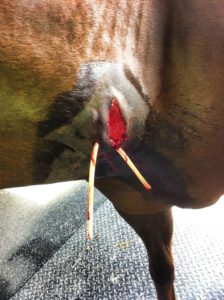
Photo credit Bridget Whitson
Preparation Creates Confidence
No one likes thinking about emergencies, but having a plan helps remove some of the uncertainty when they happen.
Keep important phone numbers readily available. Maintain a stocked first aid kit. Practice basic exams. Learn essential treatment skills.
Because when an emergency does occur, being prepared allows you to focus on what matters most — helping your horse safely through it.

Dave Sauter (retired) is a Minnesota native and graduated from the University of Minnesota in 1987. Following graduation he interned at Rood and Riddle Equine Hospital in Lexington, Kentucky. After this internship, he continued to work exclusively with horses for another five years in Kentucky before moving out West and joining Kulshan Veterinary Hospital in Lynden, WA. He was a member of the AAEP, AVMA and the WSVMA. For more information about Kulshan Veterinary Hospital call 360-354-5095 or email [email protected]. www.KulshanVet.com
