



How to Protect Large Animals in a Fire Emergency
By Texas A&M College of Veterinary Medicine and Biomedical Sciences Staff
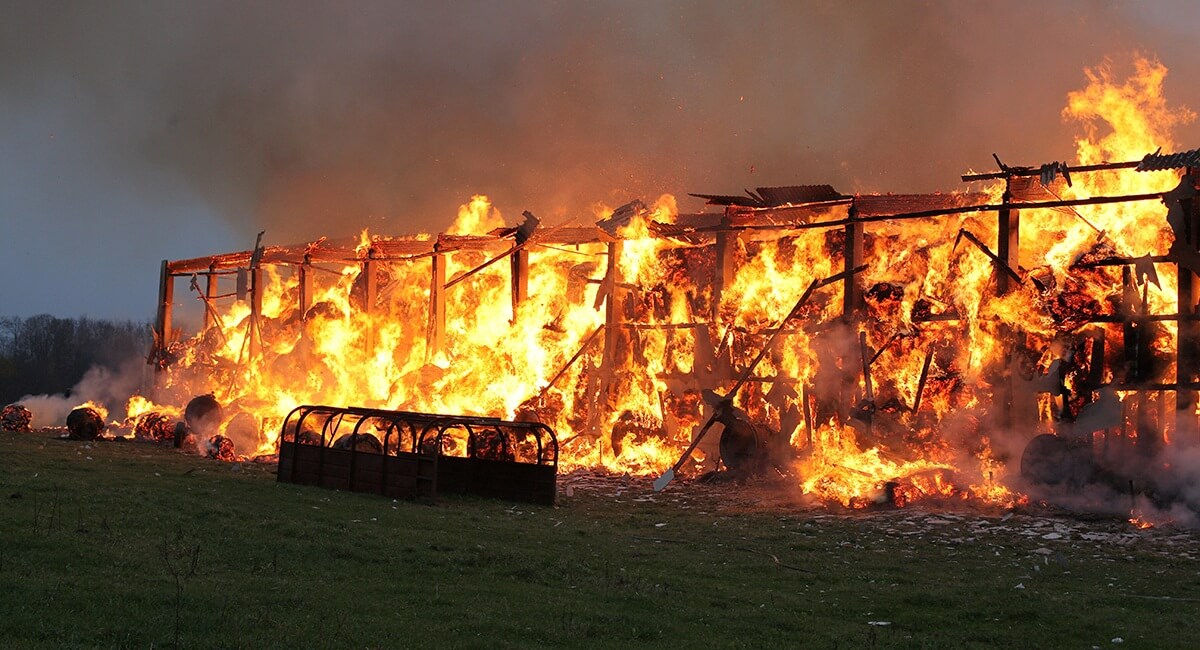
The winter chill has begun to blow through the U.S., and the comfort of a warm fire is a welcome respite. But as owners move their large animals into their barn to protect them from the elements, there are several factors that could lead to an unwanted fire, which can threaten the health and safety of the horses and livestock seeking shelter within them.
Dr. Kyle Johnson, a clinical assistant professor at the Texas A&M College of Veterinary Medicine and Biomedical Sciences, offers advice on how owners can shield their barns—and their animals—from this threat by providing a plan to execute if the danger of fire engulfs their property.
Preventive Fire Measures
Horse barns and other agricultural buildings are often full of flammable items such as hay and shavings. Even the barn itself—if constructed of wood—can serve as fuel for a fire.
“Over 80% of barn fires are caused by electrical malfunctions or human errors,” Johnson said. “Such errors may include improper disposal of a cigarette or placing a heat source—such as a space heater or hot equipment—near flammable material.”
Another risk factor to consider is the weather, as lightning strikes are also a common cause of barn fires. “To combat this worry, barns should have professionally installed lightning protection systems, which are designed to provide lightning with a safe path to follow into the ground,” Johnson said.
Because many barns and other agricultural buildings are in rural areas, where emergency and firefighter response may be delayed, preventing fire is key, according to Johnson. “Fire prevention is focused on keeping sources of ignition away from fuel sources and reducing the amount of those fuel sources as much as possible,” he said.
Methods to reduce the risk of barn fires include:
- Prohibiting smoking in or around the barn
- Ensuring electrical wiring is functioning properly
- Avoiding electrical outlet overloading
- Prohibiting welding or torch cutting in or around the barn
- Storing hay and straw in a separate structure from gasoline and diesel
- Removing cobwebs and dusting regularly
“Residential smoke detectors often do not work well in barns because of high humidity and high particulate matter in the air,” Johnson said. “Instead, rely on carbon monoxide detectors or other commercially installed fire detection alarms. Systems that connect directly to a security system company or the local fire department are ideal—such devices can improve response times.”
Urgent Evacuations
Even with thorough preparations, a fire may still occur that could threaten the safety of your horses.
“If a fire starts in a barn, it can move very quickly and there may be only minutes to act,” Johnson said. “When ignited, hay, straw, and shavings can reach nearly 300°F in less than five minutes — meaning each second is precious to save an animal’s life.
“It is important to have a properly charged ABC fire extinguisher at each of the barn’s entrances and ensure everyone knows how to operate them,” Johnson said.
In a barn fire situation, calling 911 and evacuating is the best thing an owner can do. As with house fires, no one should enter; doing so could result in serious injury or death from the fire or smoke.
“In addition, the threat of heat, carbon dioxide, carbon monoxide, and other toxic fumes produced by the burning of plastics and other materials can cause horses and livestock to suffocate,” Johnson said.
Fires can also weaken a barn, thus making it more likely to collapse. With that in mind, it is essential to have an evacuation plan in place ahead of time.
Make a Plan
Johnson recommends evacuating large animals using the following steps:
- Keep a halter or lead rope close to each stall
- Calmly but quickly lead animals away from the fire
- Contain the animals in a designated paddock or pasture
- Hose the animals off thoroughly
“Hosing animals off can remove any hot embers or fire material and can also decontaminate them,” Johnson said. “Soot from fires contains a lot of nasty substances that can be toxic to horses and humans.”
Following evacuation, all animals involved should be promptly evaluated by a veterinarian. “Even if a horse doesn’t have evidence of burns, they may have inhaled super-heated air and smoke, which can be deadly,” Johnson said. “Horses may appear healthy at first, but the injuries to the lungs and other tissues can manifest 12-24 hours later as pneumonia.”
Proactive Planning
Approaching the threat of fire without a plan not only endangers yourself, but also your property, livestock, horses, and other loved ones; having a barn fire plan is not just a recommendation—it’s a necessity.
“Write it down, discuss it with everyone at your barn, and practice it,” Johnson said. “A plan that isn’t written down and rehearsed is only an idea.” Being prepared with an evacuation plan can ensure that everyone emerges from a barn fire unharmed.
Pasture Talk is a service of the College of Veterinary Medicine & Biomedical Sciences, Texas A&M University.
See this article in the December 2025 Online Digital Edition:
December 2025

The Northwest Horse Source is an independently owned and operated print and online magazine for horse owners and enthusiasts of all breeds and disciplines in the Pacific Northwest. Our contemporary editorial columns are predominantly written by experts in the region, covering the care, training, keeping and enjoyment of horses, with an eye to the specific concerns in our region.
