



Former veterinary technician Leah Calvin brings decades of animal care experience and a practical approach to solving saddle-fitting challenges.
By Karen Pickering, Publisher, The Northwest Horse Source
SPONSORED CONTENT
A horse that tosses its head, resists being saddled, or struggles to collect may be trying to communicate something important. While these behaviors are sometimes attributed to training problems, the real issue could be discomfort caused by an improperly fitting saddle. Recognizing the difference can improve a horse’s comfort, movement, and willingness to work.
Watch the Interview: Northwest Horse Source publisher Karen Pickering visits with Leah Calvin, owner of The Right Fit Equine, about recognizing saddle discomfort, improving saddle fit, and helping horses move more comfortably.
For Leah Calvin, owner of The Right Fit Equine in Gresham, Oregon, understanding that connection is at the heart of her business. After approximately 24 years as a certified veterinary technician, Calvin transitioned into professional saddle fitting, combining her veterinary background with a lifelong love of horses. Her experience included working as an anesthesia specialist, where recognizing subtle signs of pain and discomfort was especially important. Today, those skills help her evaluate how saddles, pads, cinches, and other equipment affect a horse’s comfort, behavior, and performance.
“My background as a certified veterinary technician really gave me a strong foundation in anatomy, biomechanics, and recognizing discomfort in animals,” she explained during a recent interview with The Northwest Horse Source.
Calvin particularly enjoys the problem-solving involved in saddle fitting. Every horse presents a unique combination of conformation, conditioning, equipment, and riding demands, and she believes successful fitting requires understanding how those factors work together. Sometimes the solution involves a significant equipment change, while other times an adjustment as small as an eighth-inch shim can make a noticeable difference in the horse’s movement.
When Your Horse Is Trying to Tell You Something
One of the most common questions Calvin receives is how owners can recognize a poorly fitting saddle. Her answer often begins with behavior. Horses experiencing saddle discomfort may become anxious or resistant during saddling, show sensitivity to the cinch, hollow their backs, toss their heads, or become reluctant to collect. Some struggle to move freely through their shoulders, while others become increasingly reactive when asked to perform certain movements.
“The horses will almost always tell you,” Calvin said.
When discomfort continues, behavioral problems may escalate to bucking, rearing, biting, or other potentially dangerous reactions. Physical indicators can also develop, including back soreness, muscle atrophy behind the shoulders, uneven sweat patterns, dry spots, or white hairs appearing beneath the saddle. Calvin encourages owners to pay attention to these signs rather than dismissing them as training problems.
Determining whether an unwanted behavior is related to pain or training requires careful evaluation. Calvin’s approach is to identify and address potential equipment-related discomfort, then observe whether the horse’s behavior improves. When problems persist despite appropriate adjustments, she recommends consulting a veterinarian to investigate other possible causes. The objective is to understand what the horse is communicating before making assumptions about its willingness to cooperate.
A Thorough Approach to Saddle Fitting
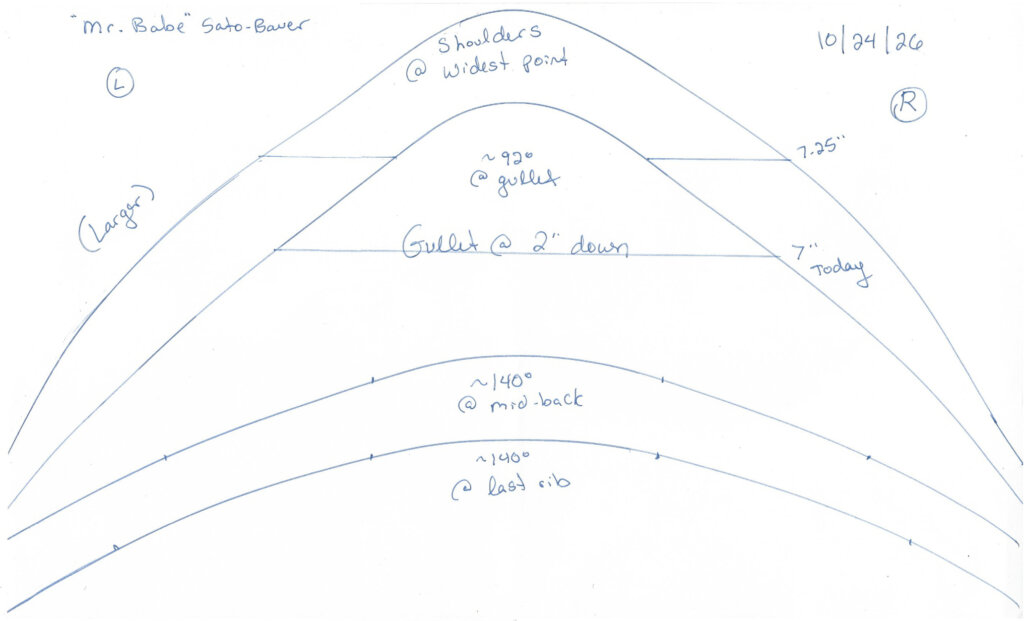
Calvin’s consultations begin with a detailed assessment of the horse’s conformation, musculature, symmetry, soreness, and sensitivity. She takes wire tracings of the back and evaluates the saddle’s tree geometry, gullet width, bar angles, balance, and pressure distribution. Rather than examining only the front of the saddle, she considers how the entire tree contacts the horse’s back and whether that contact allows comfortable movement.
The evaluation extends beyond the saddle itself. Pads, cinches, and other equipment can significantly influence overall fit, so Calvin examines the complete setup. When appropriate, she also watches the horse being ridden to evaluate how the equipment functions in motion and how the rider’s position affects balance and performance. Her goal is not simply to identify a problem but to explain why it occurs and develop practical solutions the owner can understand and maintain.
“There’s not a one-size-fits-all cookie-cutter answer for every problem,” she explained.
Her veterinary background has also influenced the thoroughness of her consultations. Accustomed to comprehensive examinations in veterinary medicine, Calvin approaches saddle fitting with similar attention to detail. Clients receive an extensive written report documenting her findings and recommendations, along with educational information they can refer to throughout the following year. She wants owners to leave with a better understanding of their horses, not simply a list of equipment adjustments.
Finding Solutions Without Replacing the Saddle
For many horse owners, discovering that their saddle may not fit properly raises an immediate concern about the expense of replacing it. Calvin understands that purchasing another saddle isn’t always practical, particularly when the existing equipment is otherwise suitable. When the saddle tree is reasonably compatible with the horse, targeted adjustments may provide a more affordable solution.
One option involves specialized saddle pads with orthotic inserts designed to address certain pressure and fit discrepancies. These inserts provide support in specific areas while maintaining relief along the spine. Calvin also offers specialized cinches, including shoulder-relief designs, and has encountered situations where simply changing the cinch material made a significant difference in a horse’s comfort.
She recalled working with a sensitive mare that responded favorably to replacing a neoprene cinch with a fleece cinch. Experiences like this reinforce her belief that every element of the saddle setup deserves consideration before recommending major equipment changes. While approximately 90 percent of her clientele uses Western saddles, she also evaluates English saddles, pads, and girths. She does not provide saddle flocking services but can assess English saddle fit and make certain adjustments, such as changing compatible gullet plates.
Why Saddle Fit Changes Over Time
One important lesson Calvin shares with horse owners is that saddle fit is not necessarily permanent. A saddle that fits a horse well today may not provide the same comfort several years later. Young horses continue developing, while mature horses experience changes in muscle, body condition, weight, and topline. Even seasonal changes in conditioning can affect how a saddle contacts the horse’s back.
For young horses, comfort is especially important during the early stages of training. Calvin explains that an uncomfortable saddle can introduce behavioral challenges that may be difficult to distinguish from ordinary training issues. As horses mature, their backs may become wider or develop different contours, requiring adjustments to equipment that previously worked well.
Horses returning to work after an extended break may also need reevaluation. Significant weight gain or loss can alter saddle contact enough that changes in padding alone may not be sufficient. Calvin tries to help owners select saddles that accommodate reasonable fluctuations in body condition, recognizing that most people cannot maintain several different saddles for the same horse.
She recommends periodic saddle-fit evaluations, ideally annually, and encourages owners to have their equipment reassessed whenever a horse undergoes substantial physical changes. By addressing potential problems early, owners may avoid discomfort that could otherwise interfere with training and performance.
One Simple Check Every Horse Owner Can Make
During our interview, Calvin shared a practical exercise that owners can use to become more familiar with how their Western saddle contacts the horse’s back. Begin by standing the horse squarely on a level surface, then place the saddle in its proper position behind the shoulders without a pad or tightening the cinch. Carefully slide a hand beneath the saddle near the front concho, the rear concho, and beneath the center of the seat area, comparing how the saddle contacts the horse in those three locations.
The goal is to feel relatively consistent contact without obvious areas of excessive pressure. Calvin notes that one of the most common problems she encounters is excessive tightness near the front of the saddle, which can interfere with the horse’s shoulder movement. Differences in pressure may be caused by tree geometry, bar angles, saddle width, or other aspects of the equipment setup.
Although this simple exercise cannot replace a comprehensive professional evaluation, it can help owners become more observant and aware of potential concerns. Calvin believes that educating riders to recognize the difference between comfortable and uncomfortable saddle contact is an important step toward improving equine welfare.
Learning From Every Horse
Calvin credits her mentor, Julie Ohlm, the original owner of The Right Fit Equine, with helping establish her foundation in saddle fitting. Ohlm began her career as a horse trainer and gradually recognized that many horses exhibiting undesirable behavior were struggling with uncomfortable equipment. As more owners sought her assistance with saddle-fitting problems, the demand eventually led her to concentrate on that work.
Building upon her mentor’s extensive experience, Calvin incorporated her veterinary knowledge and additional saddle-fitting education into her own approach. She describes the work as an ongoing learning process in which every horse presents new challenges and opportunities to improve her understanding. Rather than relying on a standard solution, she studies each horse individually, adjusting her recommendations according to its particular needs.
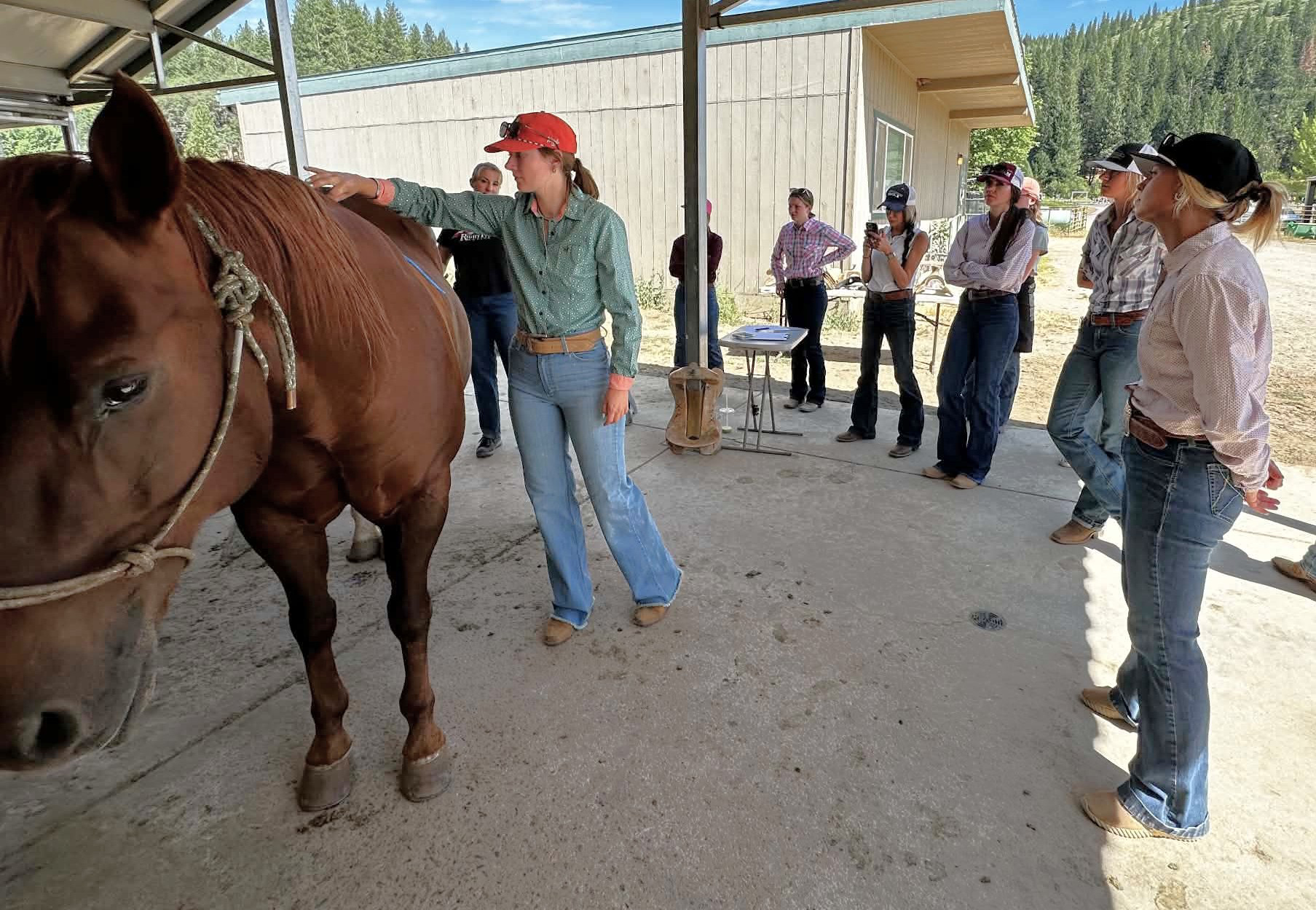
That commitment to learning has also inspired Calvin to develop educational presentations and demonstrations for horse owners. She wants riders to understand the basic principles of correct saddle fit and learn to recognize the difference between comfortable and uncomfortable pressure. During demonstrations, she encourages participants to feel how different saddles contact a horse’s back so they can better understand what their own horses may be experiencing.
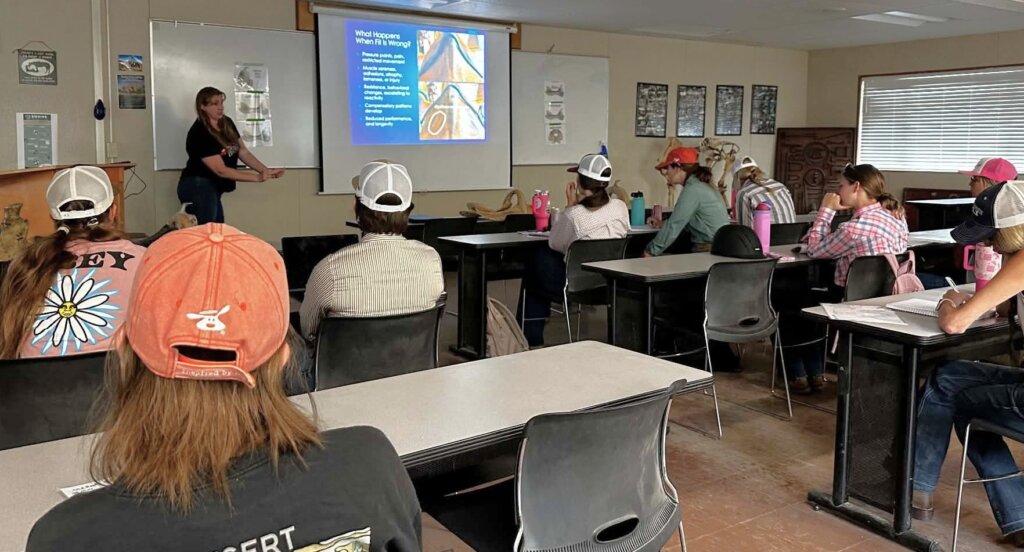
Her hope is to make saddle-fitting knowledge more accessible to everyday horse owners, including young riders who are just beginning to develop their horsemanship skills.
Serving Horse Owners Throughout the Northwest
Based in Gresham, Oregon, The Right Fit Equine is a small, woman-owned business serving primarily Oregon and Washington. Calvin regularly travels within approximately 100 miles of her home base and organizes multi-day saddle-fitting tours to accommodate clients farther away. Her travels have taken her into Washington and California, and she hopes to expand educational opportunities as her schedule permits.
As a business owner working independently, Calvin manages a demanding schedule and is frequently booked several months in advance. She encourages clients to plan ahead when requesting consultations and reminds horse owners that saddle fitting is an ongoing part of responsible horse care, not simply a consideration when purchasing a new saddle.
For Calvin, the greatest satisfaction comes from helping horses become more comfortable while giving their owners practical knowledge they can use every day. Her combination of veterinary experience, careful observation, and creative problem-solving reflects a simple philosophy: every horse deserves equipment that allows it to move comfortably and perform to the best of its ability.
Learn More About The Right Fit Equine
For information about saddle-fitting consultations, educational presentations, or available products, visit www.therightfitequine.com. Calvin also welcomes inquiries through The Right Fit Equine’s Facebook page and recommends contacting her through the website or Facebook Messenger because she frequently travels to work with clients.
Images courtesy of Leah Calvin / The Right Fit Equine.
This Buiness Spotlight is based on Karen Pickering’s interview with Leah Calvin, owner of The Right Fit Equine.
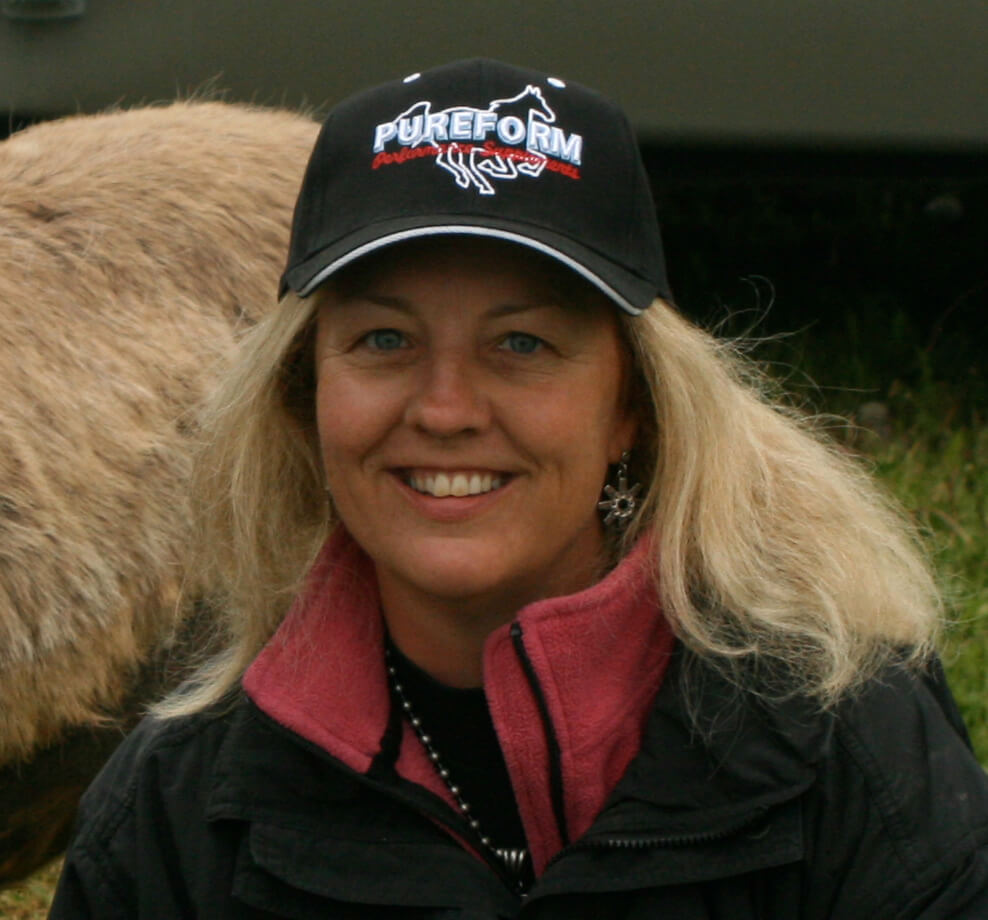
Owner / Publisher | Canfield Certified Trainer
Karen Pickering is a lifelong horsewoman and the founder of The Northwest Horse Source, which began in 1995 as a small equine newsletter and grew into a respected industry publication. With more than 30 years of experience serving the horse community, Karen now focuses on helping equine businesses and organizations build visibility, credibility, and lasting relationships through online marketing, digital promotion, and educational platforms.
As a Canfield Certified Trainer, she blends proven success principles with real-world industry experience, supporting both businesses and individuals navigating change in today’s digital landscape. Karen remains deeply connected to the horse industry and is passionate about serving the community she has helped build for over three decades.
