



Find and Fix the Pieces that Make Up the Whole Situation
Last month in Part 1, I discussed the tendency some riders have to excuse their lack of motivation for education by stating that they are “just a trail rider”. This mindset suggests that these folks aren’t serious about learning or improving their horsemanship. Well, trail riding might seem simple but most definitely is not. Let’s discuss a few common issues riders of all kinds face, including trail riders.
The Spooky Horse
There might be consistent situations that cause a horse problems, but it’s usually more important we address the principle of response in spite of trouble (covered in articles earlier this year). Most folks want to zero in on desensitization because that’s what most horse trainers preach. There’s a need for that but many times the way it’s addressed is not really very beneficial to the horse—at the standstill and with lots of repetition which often leaves a horse frozen or bored.
We need to train horses to listen to our directions and then respond. This results in the safety and comfort horses need, rather than the flight that comes more naturally to them. It can be done incrementally, starting on the ground in safe settings that you are in control of rather than waiting until you have factors stacked against you that are not in your control. This gives us the ability to redirect them when they spook instead of either letting them spook (because a little jump is all they do) or having them get worse to the point where the horse becomes a runaway.
Most folks get into trouble when they do too much at once. They ask their horse (and maybe themselves) to deal with a combination of factors in situations that are mostly out of their control and out of their comfort zone. Adding to this, some riders lack patience or don’t get good advice, and the situation becomes a case of survival or “making” something happen (e.g., “Just follow my horse across the river and you’ll be fine!”). Surviving to the end of the ride doesn’t necessarily mean successful training. We need horses to gain confidence in themselves, and the riders need this too. Confidence comes from trust and understanding.
So, we need to break problems down and address the pieces that make up the whole. For example, if you’re planning to go on a group trail ride, you should assess what you might encounter that would have a negative impact on your horse. Then get creative finding ways to measure the level of exposure in a controlled environment so you can help your horse find better answers and greater confidence.
The Barn Sour Horse
Another common issue is the barn or buddy sour horse. These are negative terms that describe a horse who’s simply looking for the safety and comfort of another horse or place. This is completely understandable and natural, but it can be extremely frustrating and even dangerous when we try to use force. We think we’re winning when the forcefulness gets us what we want but we’re only teaching a horse how to fight us.
One of the most effective ways to address this lies in the old saying, “Make the right thing easy and the wrong thing difficult.” Typically, we do the exact opposite. When a horse wants to be with their buddy, we try to force them to go somewhere else and fight them instead of redirecting their focus and helping them change their mind.
Going back to the strategy of finding and fixing the pieces that make up the whole, we can work on discouraging the buddy/barn sourness progressively in controlled situations. Putting them to work near their buddy with some intensity when they insist on being next to their friend lets them experience “wrong thing hard” and then showing them as much rest and release when they are further away or out of sight makes “the right thing easy”. We need to recognize the problem and address it specifically and intentionally to eventually achieve our goals.
When it comes to trail riding, you don’t want to sell yourself short by thinking there’s no need to improve your horsemanship. Better understanding and skills will help prepare you for those things you’d never dream could happen!
So let me encourage you in your journey—look for ways to up your game, like listening to my podcast, Life In the Saddle. Check out our huge range of resources; along with our podcast we have hundreds of videos on YouTube and a unique, ever-growing online video library. We are excited now to offer a private online community, The Remuda, filled with like-minded horse owners. The Remuda offers free access to virtual events, the entire video library, and much more! Learn more at truewesthorsemanship.com.
See this article in the August 2025 Online Digital Edition:
August 2025
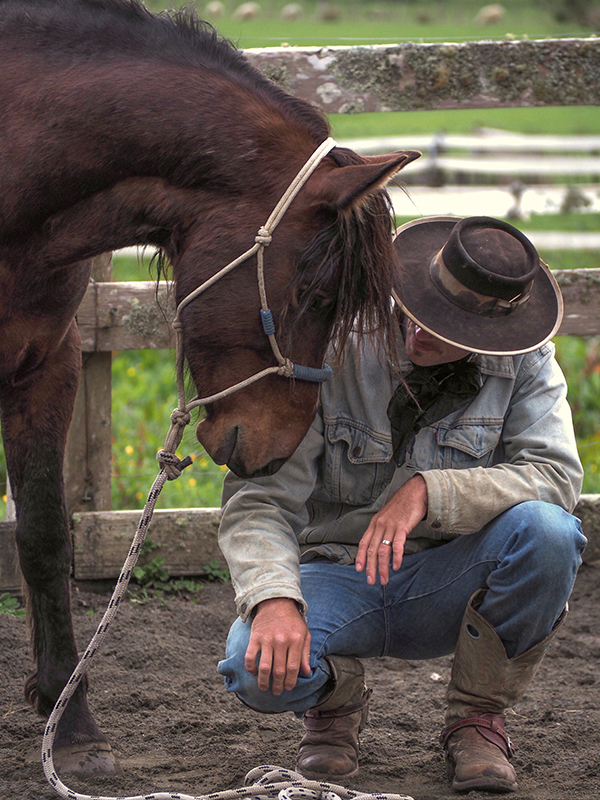
Ben Longwell of Pendleton, Oregon, operates True West Horsemanship with the mission to advance people in the adventure of practical horsemanship and help them and their horses achieve more together. With a passion for the Vaquero bridle horse tradition, Ben teaches a variety of clinics around the world and has a unique online video library so anyone—regardless of breed or discipline—can advance their communication, skill, and understanding. www.truewesthorsemanship.com
