



Ann Lesley Smith and the Unexpected Legacy of Amir Fadjur Salaam
Ann Lesley Smith wasn’t looking for a legendary Arabian bloodline.
She simply wanted to ride horses again.
After years away from riding, Smith found herself at a California ranch expecting little more than the opportunity to get back in the saddle. Instead, the visit opened the door to a history she knew little about—and ultimately led her to Amir Fadjur Salaam, a young Arabian stallion who would change the direction of her life.
“I didn’t seek a legend,” Smith said during our conversation. “I just wanted to start riding horses again.”
That may be the best way to understand Smith’s story. What began as a return to something familiar became an unexpected journey into Arabian horses, an influential bloodline, and what Smith now sees as a much larger mission involving empathy, connection, and peace.
An Unexpected Discovery
Smith’s introduction to the Fadjur legacy wasn’t planned.
As she began learning more about the horses and history surrounding the ranch, she became fascinated by The Fabulous Fadjur, an Arabian stallion whose influence extended through generations.
The more she learned, the more curious she became.
Eventually she asked a simple question: Were there any horses carrying that bloodline still there?
There were.
That discovery ultimately led Smith to Amir Fadjur Salaam.
She hadn’t gone looking for a particular pedigree, nor had she begun with plans to preserve a piece of Arabian horse history. Her interest developed as she learned what was behind the horse standing in front of her.
For Smith, pedigree alone wasn’t what made Amir remarkable.
It was the horse himself.
Something in His Eyes
Again and again during our conversation, Smith returned to one quality she believes distinguishes Amir: his unusual sensitivity to people.
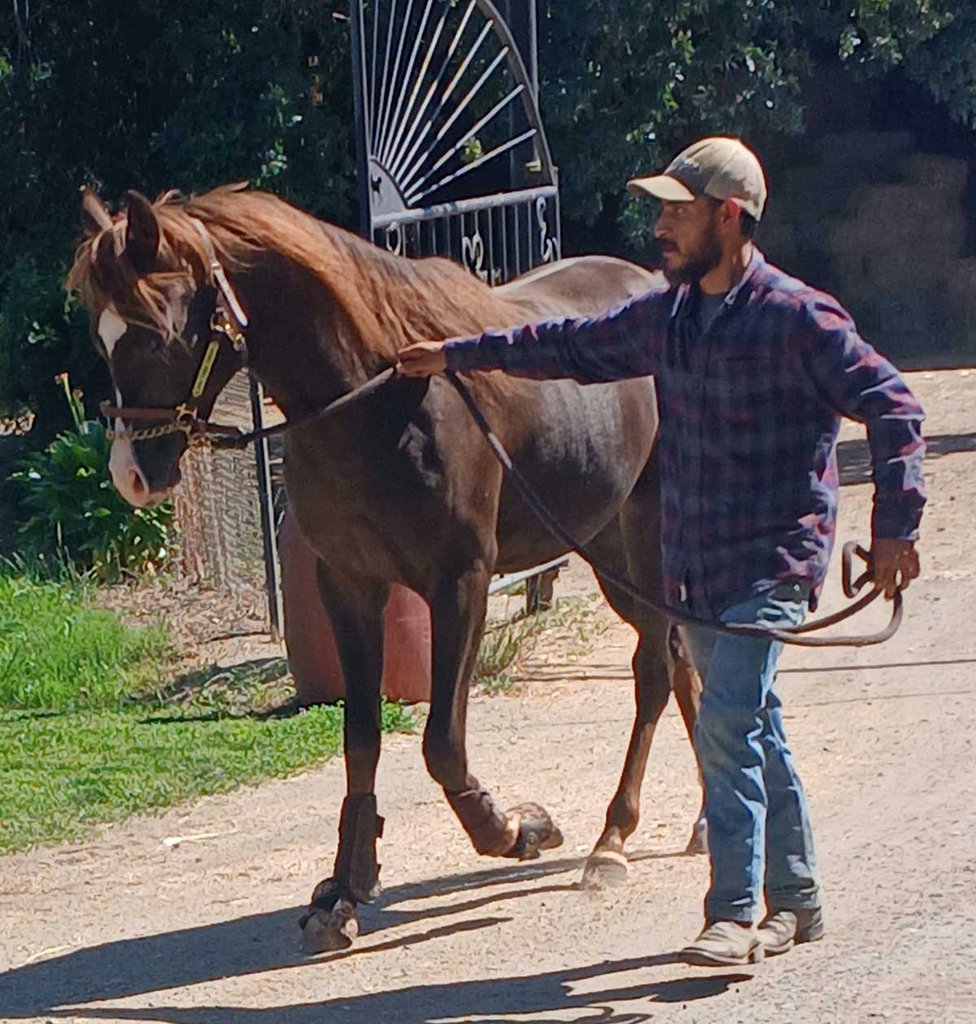
She describes it as empathy.
“You can see it in his eyes,” she said.
For anyone who has spent a lifetime around horses, the idea isn’t entirely foreign. We know horses notice things. They read our bodies, respond to tension, and recognize routines long before we realize we’ve communicated anything.
But Smith believes there is something particularly strong in Amir—and in the Arabian horses she has come to know.
She sees an intelligence and sensitivity that goes beyond simply responding to a cue.
Smith connects those qualities to the Arabian horse’s long relationship with people. She speaks passionately about traditions describing horses living in close proximity to desert families and being valued not simply as transportation, but as trusted companions.
Whether one approaches those stories as breed history, cultural tradition, or lore passed through generations, they are important to Smith’s understanding of the Arabian horse.
She believes that relationship between horse and human helped shape the qualities she sees in Amir today.
The Legacy of Fadjur
Amir’s pedigree connects him directly to The Fabulous Fadjur, one of the best-known Arabian stallions in American breed history.
But when Smith talks about that legacy, she doesn’t focus only on show-ring accomplishments or pedigree charts.
She talks about character.
She believes the kindness, intelligence, sensitivity, and connection to people associated with Fadjur are qualities she sees reflected in Amir.
That is an important distinction.
Smith isn’t interested in preserving a bloodline simply so it can exist on paper. For her, preserving the horse means preserving the qualities she believes made that lineage special in the first place.
And the longer she has lived with Amir, the more the idea has grown.
A Horse With a Larger Purpose
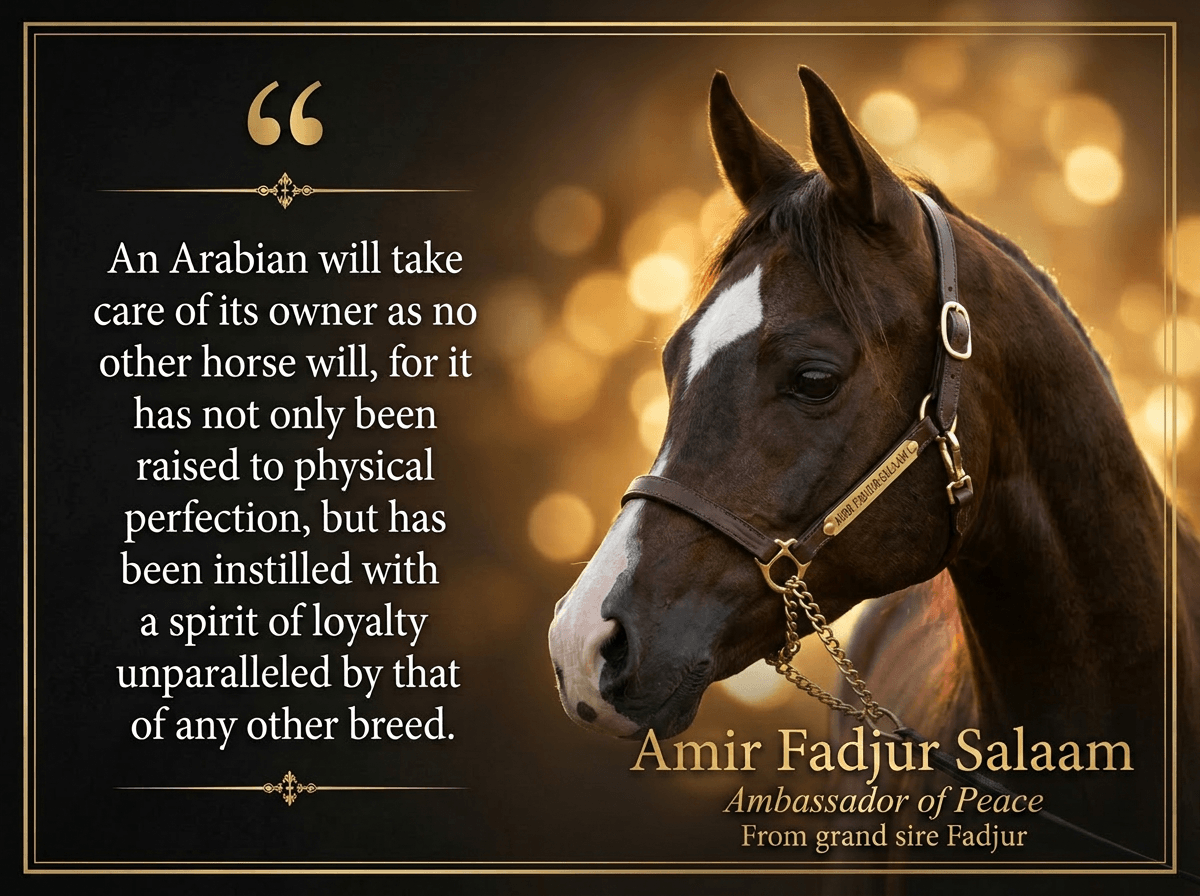
Smith now describes Amir as an Ambassador of Peace.
At first, that might sound like a grand title for a horse.
But listen to Smith explain it and the idea becomes much simpler.
Horses don’t ask about politics.
They don’t care about nationality, wealth, religion, or social standing.
They respond to what is directly in front of them.
Smith believes the Arabian horse provides an especially powerful symbol because its history crosses countries, cultures, and faith traditions. Throughout our conversation, she returned repeatedly to the idea of common origins and shared humanity.
For Smith, Amir has become a way to start that conversation.
If a horse can bring people together, she wonders, why can’t we?
She isn’t suggesting that one Arabian stallion is going to solve the world’s conflicts.
Rather, Amir represents an idea: that trust, kindness, and connection can begin without words.
History, Faith and Tradition
Smith’s understanding of the Arabian horse is deeply connected to her faith.
During our interview, she shared a traditional account connecting the Arabian horse to Abraham’s son Ishmael and the Angel Gabriel. While Ishmael’s story is told in Genesis, the Bible does not say that Gabriel gave Ishmael an Arabian horse; that account comes from later tradition rather than the biblical text.
For Smith, however, the importance of the story is less about establishing an ancient event as documented history and more about what the tradition represents.
She sees it as another connection between the Arabian horse and peoples, cultures, and faith traditions whose histories reach back thousands of years.
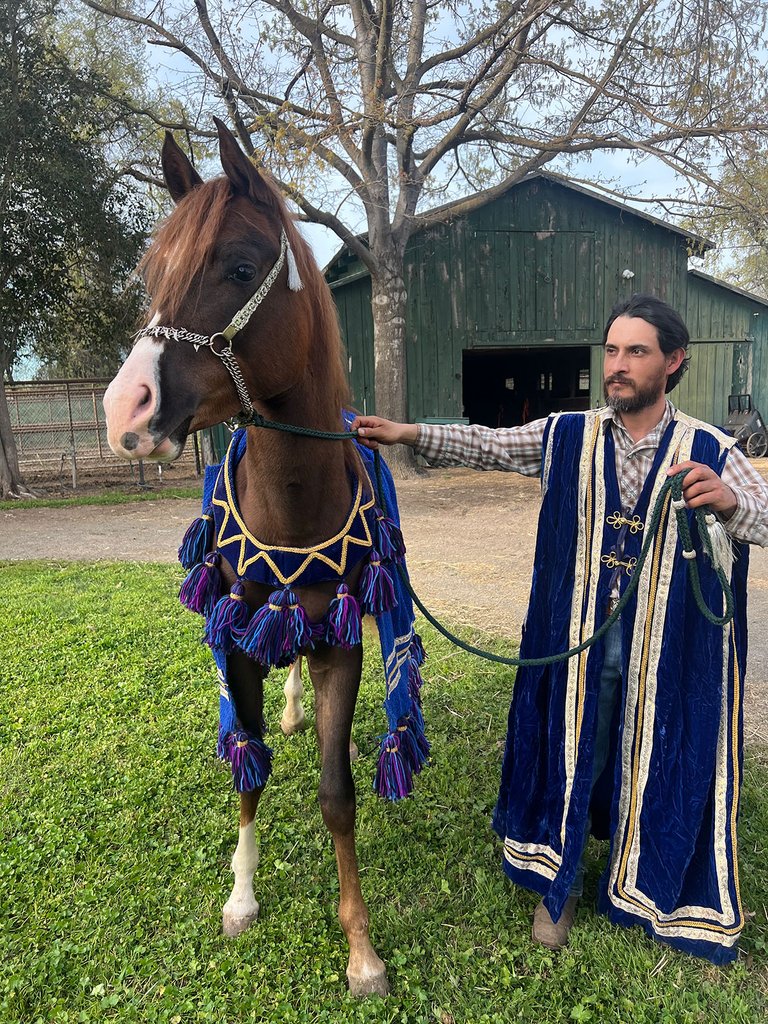
Smith sees Amir as a living reminder of those connections.
At a time when differences can seem more visible than similarities, she believes the horse offers another way of looking at what people share.
More Than Pedigree
Perhaps that’s what makes Smith’s story interesting even if you’ve never owned an Arabian.
Horse people understand that a pedigree can tell you where a horse came from.
It cannot completely tell you who that horse is.
That comes from living with him.
Watching him.
Handling him.
Learning what frightens him, what interests him, whom he trusts, and how he responds to the world around him.
Smith didn’t fall in love with Amir because she first understood every name on his pedigree.
She discovered the pedigree after the horse had captured her attention.
Then she began asking questions.
Those questions led to history.
History led to a sense of stewardship.
And stewardship eventually led to purpose.
Preserving Something Worth Keeping
There’s another part of this story that will probably resonate with longtime horse owners.
The horse world changes.
Bloodlines disappear. Ranches change hands. Old horsemen and horsewomen pass away. Photographs end up in boxes. Stories that everybody once knew become stories nobody remembers.
Sometimes preserving our equestrian heritage happens deliberately.
Other times, somebody simply walks through a door, becomes curious, and starts asking questions.
Smith believes that’s what happened to her.
She wasn’t trying to become the caretaker of a legacy.
“I didn’t seek a legend.”
But she found one.
And now she feels responsible for what happens next.
Amir’s Next Chapter
Smith’s plans for Amir extend beyond her own California property.
She hopes his story can introduce more people to the Arabian horse while encouraging conversations about kindness, empathy, and the things people have in common.
Whether Amir ultimately becomes known around the world as an Ambassador of Peace remains to be seen.
He’s still a horse.
And perhaps that’s exactly why Smith’s idea is compelling.
Horses have a way of stripping away the things humans make complicated.
Stand quietly beside one and titles don’t matter much.
Neither does your bank account, your politics, or where you came from.
What matters is whether the horse trusts you.
For Smith, that simple relationship has become a metaphor for something much larger.
And it all started because one woman decided she wanted to ride horses again.
Listen to the Conversation
Prefer to hear the story in Ann’s own words?
Listen to my conversation with Ann Lesley Smith as she shares how she discovered Amir Fadjur Salaam, what she has learned about his Arabian heritage, and why she believes this young stallion can carry a message of empathy and peace.
Editor’s note: This feature is based primarily on Karen Pickering’s interview with Ann Lesley Smith. Historical and spiritual traditions discussed by Smith are presented as her perspectives and recollections and should not be interpreted as independent historical verification by Northwest Horse Source.
About Ann Lesley Smith
Ann Lesley Smith is a California philanthropist, ranch owner, and equestrian whose work centers on horses, healing, faith, and service. She owns Arabian stallion Amir Fadjur Salaam and hopes to use his story and presence to encourage greater empathy, connection, and peace.
Images supplied by Ann Lesley Smith
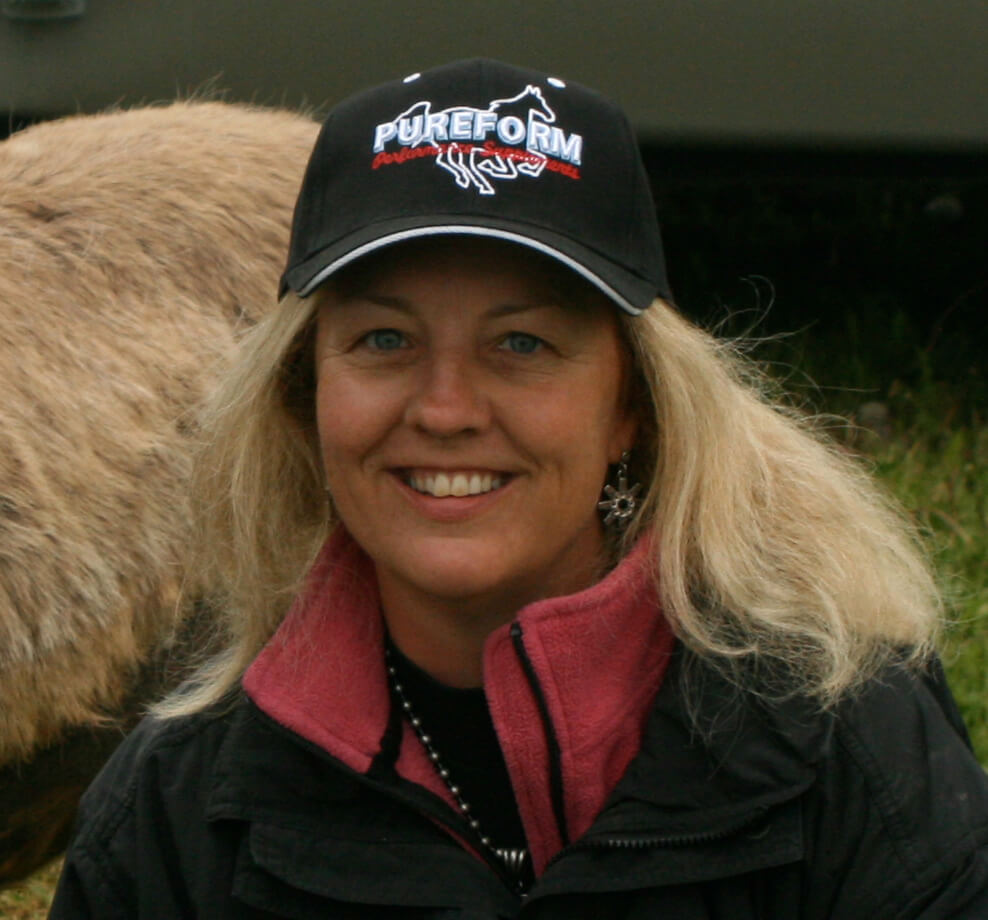
Owner / Publisher | Canfield Certified Trainer
Karen Pickering is a lifelong horsewoman and the founder of The Northwest Horse Source, which began in 1995 as a small equine newsletter and grew into a respected industry publication. With more than 30 years of experience serving the horse community, Karen now focuses on helping equine businesses and organizations build visibility, credibility, and lasting relationships through online marketing, digital promotion, and educational platforms.
As a Canfield Certified Trainer, she blends proven success principles with real-world industry experience, supporting both businesses and individuals navigating change in today’s digital landscape. Karen remains deeply connected to the horse industry and is passionate about serving the community she has helped build for over three decades.
